On Alex Storozynski’s film „Kosciuszko: A Man Before His Time”

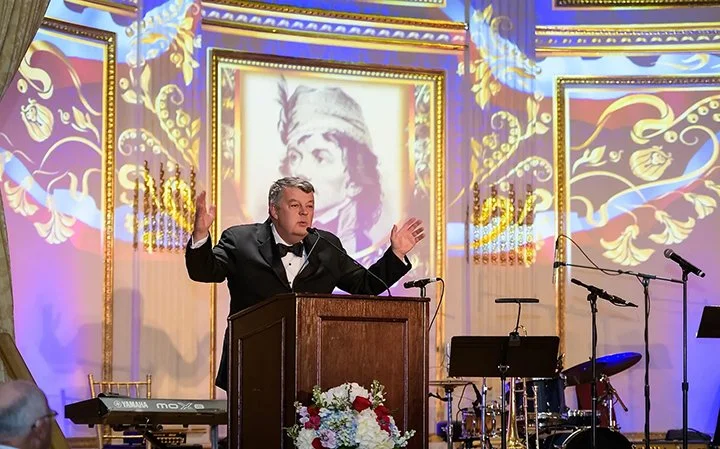
Alex Storozynski — journalist, author, and filmmaker; author of „The Peasant Prince: Thaddeus Kosciuszko and the Age of Revolution” and writer-director of the documentary „Kosciuszko: A Man Before His Time„. Photo courtesy of Alex Storozynski / storozynski.com.

Joanna Sokołowska-Gwizdka

Years ago, I watched a documentary about Tadeusz Kościuszko whose title I no longer remember. The filmmakers traveled to the American town of Kosciusko, Mississippi, and asked people on the street whether they knew who the man was whose name their town bears. One response stayed with me in particular. Someone was astonished to learn that Kościuszko was Polish. All their life, they had assumed he was Native American.

Years later, that scene came back to me while I was watching Alex Storozynski’s documentary Kosciuszko: A Man Before His Time. Kościuszko’s name is, after all, inscribed in the American landscape: towns, counties, streets, bridges, schools, and mountains bear his name, and monuments to him stand in many places across the United States. And yet the man behind that name remains surprisingly little known to many Americans.

American filmmaker, photographer, and writer Floyd Webb, who was born in Mississippi, has described an almost identical experience. He passed through the town of Kosciusko many times while visiting family or traveling between Mississippi and Chicago. The town’s name seemed entirely natural to him, as if it had simply always been there. Yet no one had ever told him where it came from. Only many years later, during visits to Warsaw and Kraków, did Polish friends tell him about Tadeusz Kościuszko. Webb then realized that he had known Kościuszko’s name all his life — first from Mississippi, later from the monument in Chicago — without knowing the man himself. As he observed, sometimes history stands in plain sight before us for an entire lifetime before we truly begin to see it.

A Journalist Fascinated by a Polish Hero

Alex Storozynski was born in New York City in 1961 into a family of Polish immigrants. He grew up in Brooklyn and Queens. His father, Dionizy, came from Lwów, while his mother, Irena, was from Volhynia. Polish history was therefore present in his home from childhood. As a boy, he accompanied his father to gatherings of Polish veterans, where portraits of Pulaski and Kościuszko hung on the walls.

He graduated from the State University of New York at New Paltz and later from Columbia University’s Graduate School of Journalism. He went on to build a distinguished career in American journalism. He was a member of the editorial board of the New York Daily News, the founding editor-in-chief of the free daily newspaper amNewYork, and city editor of The New York Sun. In 1999, the editorial board of the New York Daily News, of which he was a member, received the Pulitzer Prize for its campaign to save Harlem’s legendary Apollo Theater.

For many years he has also been associated with The Kosciuszko Foundation in New York. In 2008 he became its president and executive director, and he currently serves as chairman of its Board of Trustees.

Tadeusz Kościuszko, however, became much more to him than the patron of a Polish-American institution. Storozynski spent around ten years working on his biography, researching archives, correspondence, and accounts left by people who had known the Polish commander. In 2009, The Peasant Prince: Thaddeus Kosciuszko and the Age of Revolution was published in the United States and later appeared in Polish as Kościuszko. Książę chłopów. The biography received, among other distinctions, the Fraunces Tavern Museum Book Award.

What fascinated Alex Storozynski above all was how different the real man behind the textbook monument was from the simplified image of a national hero.
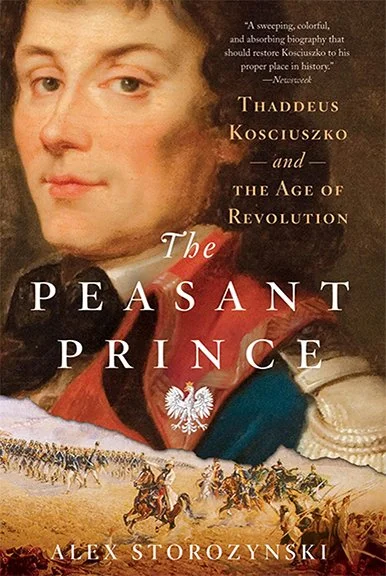
Alex Storozynski’s book about Tadeusz Kościuszko

A Man Before His Time

The documentary Kosciuszko: A Man Before His Time was made in 2015. Storozynski wrote the screenplay and directed the film, which was based on his book. American actor Blair Underwood served as narrator, while Olek Krupa provided the voice of Kościuszko. Filming took place in Saratoga, West Point, Philadelphia, and Poland, among other locations. Historians appear in the film, as does Zbigniew Brzezinski. The documentary was broadcast by PBS stations in the United States.

The title of the film is key to the way Alex Storozynski tells the story of his subject. He is interested not only in Kościuszko the general, military engineer, hero of Saratoga, and designer of the fortifications at West Point. Above all, he asks what the word freedom meant to Kościuszko.

Kościuszko lived in a world that was not ready for his ideas. He understood freedom as a right that should not belong only to society’s privileged classes. He thought about peasants, townspeople, Jews, women, and, in America, Black people as well.

Before Kościuszko became a hero of two continents, however, he was a young man whose life was changed by an unfulfilled love.

Ludwika Sosnowska

After graduating from Warsaw’s School of Chivalry and spending time in France, Kościuszko returned to Poland but was unable to find a position in the army. He became tutor to the daughters of Józef Sosnowski, Field Hetman of Lithuania. One of them was Ludwika Sosnowska.

The young teacher and his pupil fell in love. Ludwika was well educated and interested in new economic ideas, including physiocracy, which also fascinated Kościuszko. Alex Storozynski points out that the two were connected not only by affection but also by a similar way of thinking about society.

Ludwika’s father, however, had no intention of giving his daughter in marriage to an impoverished nobleman without great wealth or social standing. Kościuszko and Ludwika attempted to elope, but their plan failed. Ludwika later became the wife of Prince Józef Aleksander Lubomirski.*

Kościuszko left Poland. Before long, he found himself on the other side of the Atlantic, where a revolution was beginning that would change the world.

Tadeusz Kościuszko, artist unknown, National Museum in Warsaw, public domain

1776 — The Birth of America

Kościuszko arrived in America in the year the Declaration of Independence was proclaimed. In October 1776, Congress appointed him a colonel and engineer in the Continental Army.

His talent became particularly evident during the Saratoga campaign. It was Kościuszko who selected and prepared the American defensive positions at Bemis Heights, making brilliant use of the terrain.

Later, Tadeusz Kościuszko was entrusted with building a system of fortifications at West Point on the Hudson River, a strategically crucial location whose loss could have divided the rebellious colonies in two. He created fortifications that helped make West Point one of the most important defensive strongholds of the young nation.

Kościuszko was therefore one of the people who helped make the creation of the United States possible.

Freedom — But for Whom?

It is here that the most contemporary aspect of Alex Storozynski’s story begins. The American Revolution proclaimed the equality of human beings, while at the same time the new republic remained a society built to a considerable extent on slavery.

Kościuszko recognized this contradiction.

In 1798, before leaving the United States once again, Kościuszko drew up an extraordinary will. He entrusted his American estate to Thomas Jefferson and instructed that the money be used to purchase the freedom of enslaved people and to provide them with vocational training and the means to begin independent lives.
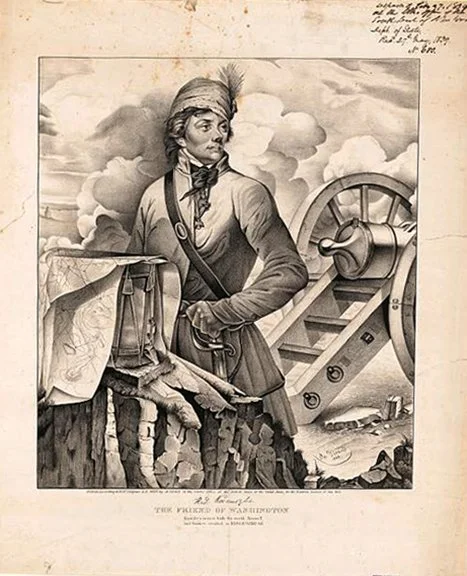
Tadeusz Kościuszko, Friend of Washington, A. Girard, ca. 1839. Photo: Library of Congress, Prints and Photographs Division, public domain.

Return to Poland

Kościuszko returned to Europe as a hero of the American War of Independence. Several years later, he became the leader of the 1794 uprising in Poland.

Here, too, his understanding of independence extended beyond the interests of the nobility. After the victory at Racławice, he put on a peasant’s homespun coat, while the Proclamation of Połaniec limited the personal subjugation of peasants and reduced the compulsory labor obligations of those who took part in the uprising. Kościuszko attempted to create a political community broader than the traditional noblemen’s Polish-Lithuanian Commonwealth.

This is why Alex Storozynski describes him as a man before his time. Not because every modern concept of human rights can simply be attributed to him, but because, against the background of the eighteenth century, he consistently sought to broaden the circle of people entitled to freedom.

Not a Monument, but a Man

Alex Storozynski’s film is at its most compelling when it allows us to see Kościuszko not as a bronze monument but as a human being — first as a young man in love with Ludwika, a talented draftsman and engineer; later as an emigrant who set out for another continent without yet knowing that he would find himself at the center of one of the most important events of the eighteenth century; an officer who built his career through talent rather than wealth or birth.

Above all, however, we see a man who persistently asked an uncomfortable question:

If we demand freedom for ourselves, can we deny it to others?

Perhaps this is precisely why Kościuszko fascinated Alex Storozynski so deeply.

250 Years Later

In 2026, Kościuszko’s story takes on an additional significance. The United States is celebrating the 250th anniversary of the Declaration of Independence, while the year also marks the 280th anniversary of Tadeusz Kościuszko’s birth.

Floyd Webb, who for decades passed through Kosciusko, Mississippi, and by the Kościuszko monument in Chicago before learning who the man behind the name actually was, has written that history can preserve names while quietly setting aside the ideas that once gave those names meaning.

Alex Storozynski’s film attempts to restore both. Not only Kościuszko’s name, but also the man behind it.

____________________

Note:

*While working on my master’s thesis, The Castle Theater in the Residence of the Lubomirski and Potocki Families in Łańcut, I was examining archival materials preserved at Łańcut Castle when I came across the memoirs of Teofil Bauman, the son of Fryderyk Bauman, an architect and stucco artist who worked at Łańcut for Princess Marshal Izabela Lubomirska.

There I found the story of how, during a visit to the Lubomirski family in Równe, Princess Marshal became so enchanted with their young son Henryk that she decided to take him with her. She hid the child in a large fur muff and drove away with him, informing his parents only afterward.

It turned out that the boy’s mother was Ludwika Sosnowska, Tadeusz Kościuszko’s beloved, who, as the wife of Józef Lubomirski, gave birth to their son in 1777. In letters to her mother, Ludwika complained of how deeply she missed her child, but eventually it was agreed that Henryk would remain with Princess Marshal, who provided him with the finest education and upbringing available at the time.

__________

Sources:

  1. Alex Storozynski, The Peasant Prince: Thaddeus Kosciuszko and the Age of Revolution, Thomas Dunne Books/St. Martin’s Press, New York, 2009.

  2. Alex Storozynski, Kosciuszko: A Man Before His Time, documentary film, 2015.

  3. U.S. National Park Service, Saratoga National Historical Park — “Tadeusz Kosciuszko.” Biography. Tadeusz Kosciuszko – National Park Service

  4. Library of Congress — “Our Founding Uncle, Thaddeus K.” Materials on Kościuszko’s role in the American Revolution and his will. Our Founding Uncle, Thaddeus K. – Library of Congress

  5. Polish History — Kościuszko – a man before his time, Interview with Alex Storozynski.

  6. The Kosciuszko Foundation — materials on Alex Storozynski’s activities, his journalistic career, his book on Kościuszko, and his work with The Kosciuszko Foundation. The Kosciuszko Foundation – Mission and History

  7. Floyd Webb — “An Opportunity to Mean It,” 2026. A personal reflection by the American filmmaker. An Opportunity to Mean It
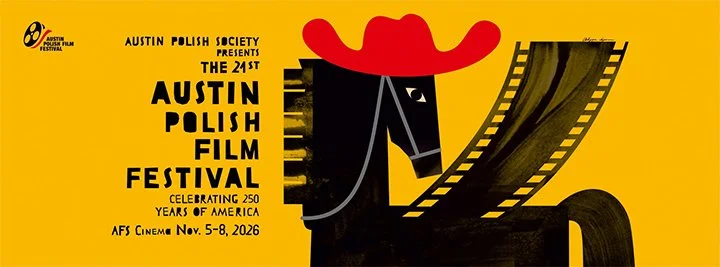
The Many Faces of Film. Austin Polish Film Festival 2026.

Polish cinema in its many forms, conversations with filmmakers, an exhibition of posters for Andrzej Wajda’s films, and a closing piano concert — these are the highlights of the 21st Austin Polish Film Festival, which this year celebrates the 250th anniversary of the United States.

Design: Patrycja Longawa

Joanna Sokołowska-Gwizdka

When Tadeusz Kościuszko arrived in America in 1776, the young republic’s independence was still a promise that had to be fought for. Two and a half centuries later, his story will return to the screen in Austin, opening a broader exploration of Polish contributions to American life and world culture. This year’s Austin Polish Film Festival will spotlight people whose knowledge, talent, and imagination transcended borders, languages, and generations.

The festival’s 21st edition will take place November 5–8 and 15, 2026. Feature films and documentaries, a poster exhibition, conversations with guests, and a closing concert will weave together a multifaceted story of Polish-American ties. The main film events will be held at AFS Cinema, 6259 Middle Fiskville Road in Austin.

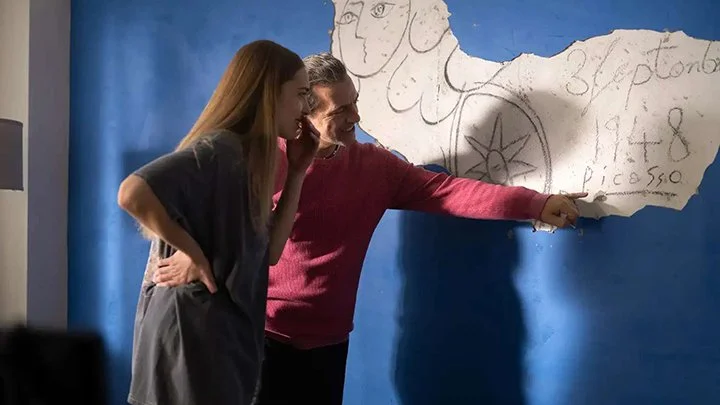
Picasso’s Mermaid (2026), directed by Janusz Zaorski. Photo: Jarosław Sadkowski, press materials.

Gala: From Kościuszko to Picasso

The gala on Friday, November 6, beginning at 6:30 p.m. with a reception featuring Polish cuisine, will include Alex Storozynski’s documentary about Tadeusz Kościuszko. The Polish military engineer arrived in Philadelphia in August 1776, just weeks after the adoption of the Declaration of Independence. His expertise in fortifications helped the Americans secure victory at Saratoga; he was later entrusted with fortifying West Point. A hero of the American Revolutionary War and later the leader of an uprising in Poland, Kościuszko linked the destinies of both nations through his life’s work.

The gala will also feature Janusz Zaorski’s Picasso’s Mermaid, a comic tale inspired by a true episode from Pablo Picasso’s visit to postwar Warsaw. A mermaid drawn on an apartment wall sets the stage for an extraordinary encounter between great art and everyday life. After the screening, audiences will join the director for a conversation about the film, its inspirations, and finding humor in unexpected situations.

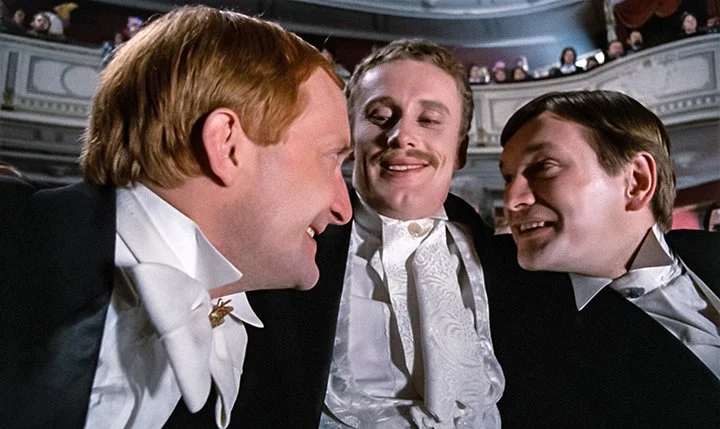
The Promised Land (1974), directed by Andrzej Wajda. Images courtesy of WFDiF / 35mm.online.

Wajda: A Polish Experience, a Universal Language

Andrzej Wajda will hold a special place in the program as we celebrate the centenary of his birth this year. Rooted in Polish history, literature, and painting, his cinema spoke to audiences around the world. Through his characters’ lives, he explored difficult choices, the tension between dreams and reality, and individual responsibility in the face of history. On March 26, 2000, he received an honorary Oscar in recognition of five decades of extraordinary film direction.

The festival’s opening evening will be dedicated to Wajda. On Thursday, November 5, an exhibition of posters for his films will open at 6:30 p.m., followed by a screening of The Promised Land at 7:30 p.m. The posters will offer a fresh perspective on his work through the imagination of artists who translated its dramatic intensity into metaphor, symbol, and color.

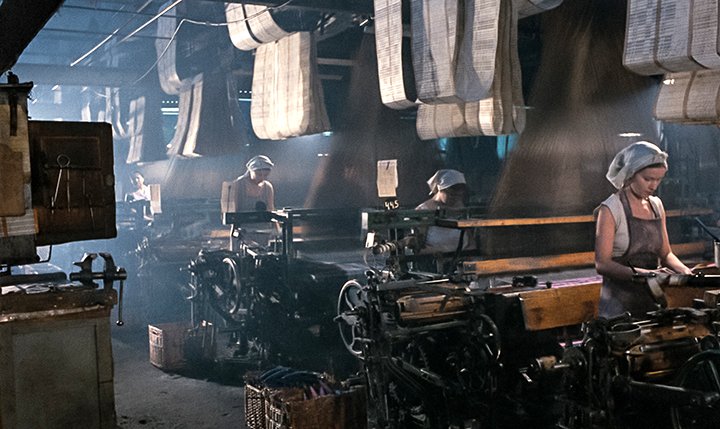
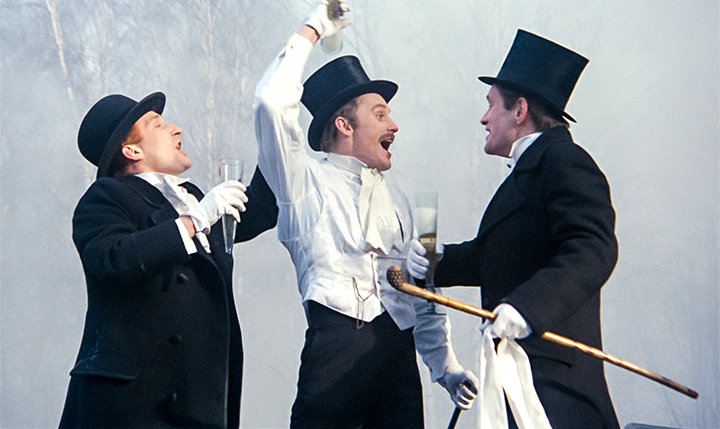
This adaptation of Władysław Reymont’s novel will transport audiences to nineteenth-century Łódź — a city of factory chimneys, burgeoning fortunes, and ambitions that come at a steep price. The sweeping scope and painterly power of The Promised Land remain captivating, while its questions about the limits of compromise and the cost of success continue to resonate.

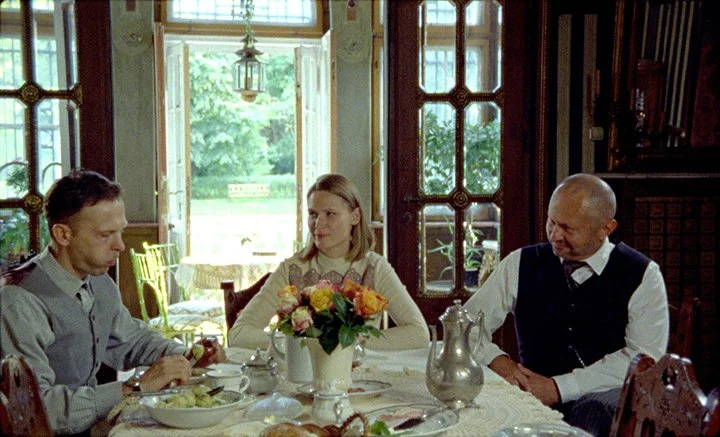
The Assistant, directed by Anka and Wilhelm Sasnal. Photo: press materials.

Literature Through the Lens of Cinema

Literary worlds will also come to life in The Doll, directed by Maciej Kawalski, and The Assistant by Anka and Wilhelm Sasnal, an adaptation of Robert Walser’s novel. Alongside the works of Prus and Reymont, the Swiss writer’s story will offer another perspective on individuals caught up in social hierarchies, financial dependencies, and the desire to change their fortunes.

The Sasnals’ film will also introduce audiences to a creative duo whose work brings together literature, painting, and cinema. Wilhelm, one of Poland’s most internationally recognized contemporary painters, brings a visual artist’s sensibility to their filmmaking; Anka, a director and screenwriter with a background in Polish literary studies, helps shape their distinctive cinematic language. The connection between the arts is particularly close here: paintings Sasnal created for The Assistant were also exhibited at the Stedelijk Museum in Amsterdam. After the screening, audiences will have the opportunity to speak with Piotr Trojan, who plays the title role.

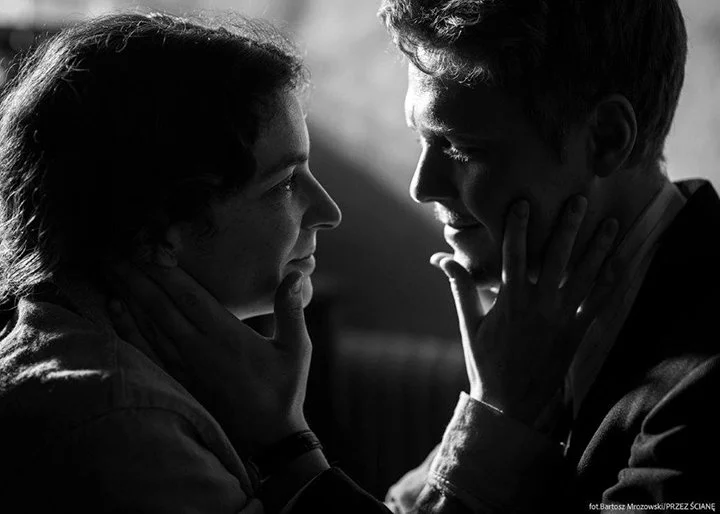
Through the Wall, directed by Maciej Sobieszczański. Photo: WFDiF.

From History to the Present

Among the historical films, a highlight will be Through the Wall by Maciej Sobieszczański, winner of the Golden Lions at this year’s Polish Film Festival in Gdynia. Inspired by the true experiences of prisoners during the Stalinist era, the film explores the strength of a bond forged in a world of violence and isolation.

Broadening this historical perspective is Covenant of Blood: The Last Soldiers of World War II by Patrick Ney and Stefan Tompson, a documentary about Poland’s anti-communist underground resistance. Both films remind us that the end of the war did not mean freedom for everyone. Stefan Tompson will travel to Austin to meet with audiences after the screening.

Meanwhile, Altar Boys, There Are No Ghosts on Dobra Street, and Memories of Insignificance will turn our attention to social tensions, family relationships, and the search for meaning. In these films, seriousness meets humor, rebellion encounters helplessness, and the longing for closeness confronts the difficulty of connecting with others. This is cinema that leaves room for viewers’ own emotions and questions.

Esther Wojcicki. Photo: press materials.

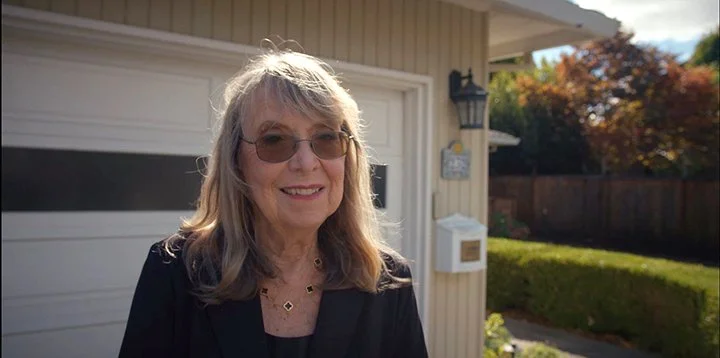
The Wojcicki Family: Silicon Valley’s Polish Roots

On Saturday, November 7, at 2:30 p.m., we will screen The Godmother of Silicon Valley — a documentary about Esther Wojcicki, a teacher who helped generations of students develop independence, creativity, and the courage to think for themselves.

Polish experiences resonate deeply within this American story. Esther’s husband, Stanley Wojcicki, born Stanisław Jerzy Wójcicki, was a distinguished physicist, professor, and chair of Stanford University’s physics department. As a boy, he fled communist Poland with his mother and brother, reaching the United States via Sweden. His father remained in Poland, where he was imprisoned for political reasons.

Esther and Stanley’s three daughters made their mark in different fields: Susan helped build Google’s success and led YouTube for many years; Anne co-founded the genetic testing company 23andMe; and Janet devoted her career to anthropology, epidemiology, and research into children’s health. Their family’s story weaves the experience of immigration together with a belief in education and the ability to shape one’s own future.

Esther Wojcicki and the film’s directors, Łukasz Bernaś and Maciej Kawecki, will attend the festival. The post-screening conversation will explore the less visible foundations of success: trust, curiosity, and the everyday work of helping others grow.

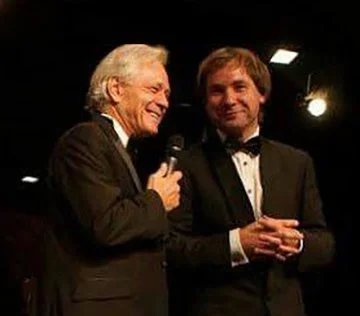
Marek Drewnowski and Michał Drewnowski. Photo: the artists’ archives.

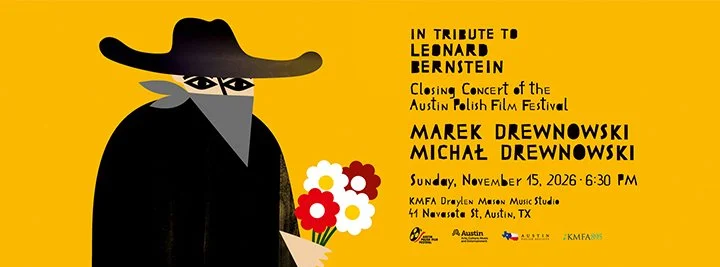
The Drewnowskis, Bernstein, and Music Beyond Borders — the Festival’s Closing Concert

This year’s festival will conclude with In Tribute to Leonard Bernstein. On November 15 at 6:30 p.m., pianists Marek and Michał Drewnowski will perform at KMFA 89.5 Classical’s Draylen Mason Music Studio, 41 Navasota Street. The evening will bring together Polish and American music with Marek Drewnowski’s personal account of his collaboration with the legendary conductor and composer.

In 1985, Marek Drewnowski performed Brahms’s Piano Concerto No. 1 with the Boston Symphony Orchestra under Bernstein’s baton at Tanglewood. During the evening in Austin, his recollections, accompanied by archival photographs, will offer audiences a glimpse behind the scenes of working with one of the twentieth century’s greatest musicians.

The joint appearance of Marek and Michał Drewnowski will also make the concert a dialogue between generations. Father and son will each present their own interpretations before joining one another at the piano for a four-hand finale. The evening will bring the festival’s central theme full circle, recalling how Polish and American paths intersect through art, leaving a lasting impression on musicians and listeners alike.

Design: Patrycja Longawa

From Kościuszko to Wajda, from great literature to contemporary challenges, from a family screening to an evening of music — this year’s festival promises something for audiences with a wide range of interests and sensibilities. There will be time for laughter, emotion, and reflection, and above all for conversations that will continue long after the screenings end.

The festival is organized by the Austin Polish Society. For the full program and ticket information, visit austinpolishfilm.com.

Bolesław Prus’s „The Doll” – A Penetrating Portrait of Polish Society

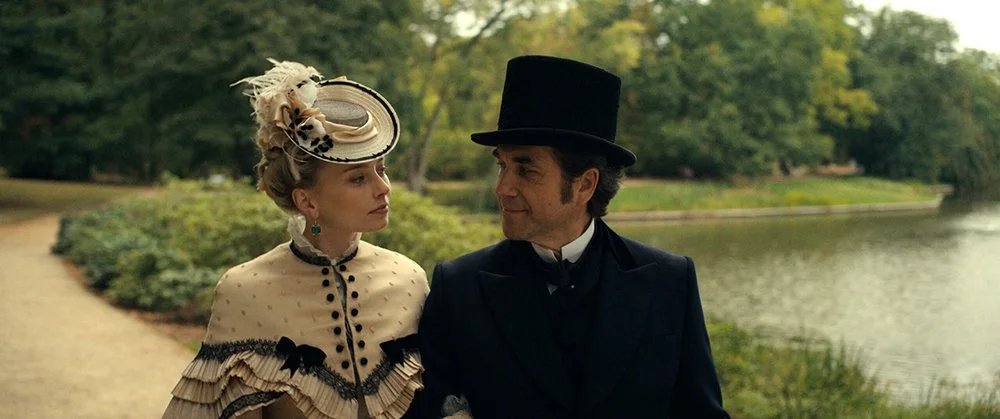
Marcin Dorociński as Stanisław Wokulski and Kamila Urzędowska as Izabela Łęcka in The Doll (2026), directed by Maciej Kawalski. Photo: Press materials / Kino Świat.

Joanna Sokołowska-Gwizdka

Bolesław Prus’s The Doll was written at a time when Poland no longer existed on the map of Europe, and the failures of successive national uprisings had prompted a period of reflection on the nation’s future. Without abandoning the dream of independence, Poles began seeking other ways to strengthen their society. Following the defeat of the January Uprising of 1863, the Positivist ideals of organic work and grassroots education gained particular importance. The development of entrepreneurship, education, and science, along with overcoming social divisions, was intended to strengthen a nation deprived of its own state. These ideas found widespread expression in the literature of the period.

Against this historical background, Bolesław Prus took a close look at Warsaw society in the second half of the nineteenth century, when the city was under Russian rule. He created a multifaceted portrait of its social divisions, aspirations, prejudices, and contradictions between professed values and actual behavior. At the same time, he explored with remarkable insight the human desire for love, success, and social recognition. As a result, more than 130 years after its first publication, The Doll continues to invite new interpretations, while many of Prus’s observations remain relevant today.

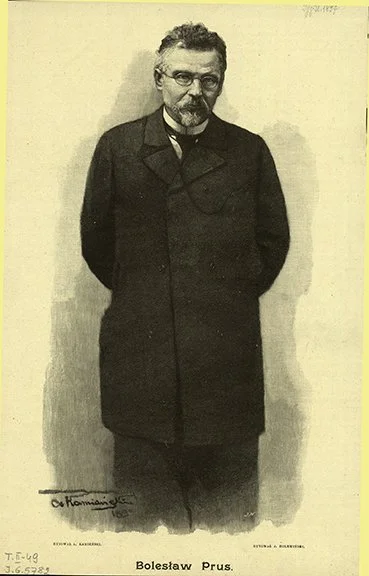
Bolesław Prus, 1897. Wood engraving by Józef Holewiński after Antoni Kamieński. National Library of Poland, Polona. Public domain.

Bolesław Prus – The Writer’s Life and Experiences

Bolesław Prus, whose real name was Aleksander Głowacki, was born in 1847 in Hrubieszów, into an impoverished noble family. His father, Antoni Głowacki, belonged to a family bearing the Prus I coat of arms, from which the writer adopted his literary pseudonym. Having lost much of its former wealth, the family was forced to earn a living through paid employment.

In 1863, at the age of sixteen, Aleksander took part in the January Uprising against Russian rule. He was wounded in a skirmish and taken prisoner by Russian forces. The defeat of the uprising left a lasting mark on his generation, which had been raised in the Romantic tradition of fighting for national freedom. Prus later became one of the leading figures of Polish Positivism.

He was deeply interested in mathematics, physics, and technological advances. He dreamed of pursuing a scientific career, but financial difficulties led him toward journalism and literature. He gained popularity through his Weekly Chronicles, published in the Warsaw press. With humor, irony, and social sensitivity, he portrayed the city’s everyday life: new inventions, entrepreneurial activity, aristocratic customs, the struggles of its poorer inhabitants, and developments in commerce and education. These observations provided the foundation for The Doll, in which he offered a critical examination of the society of his time.

The Doll (2026), directed by Maciej Kawalski. Photo: Press materials / Kino Świat.

Warsaw Under Foreign Rule

The Doll was published in installments in the Kurier Codzienny newspaper between 1887 and 1889, with its first book edition appearing in 1890. The novel is set primarily in Warsaw in 1878–1879, when the city was under Russian rule.

Prus’s Warsaw is a city of contrasts. Elegant salons and lavish social gatherings exist alongside the poverty of the Powiśle district. People from different social classes cross paths in the streets and shops, yet they remain divided not only by wealth but also by social background, customs, and mutual prejudices.

Prus portrays the aristocracy critically, exposing its attachment to inherited privileges, its disdain for work and entrepreneurship, and its indifference to poverty. He also recognizes the opportunities for progress that society squanders because of its own limitations. The Doll is therefore not merely a portrait of Warsaw under foreign rule, but also an attempt to understand the weaknesses of a society upon which the country’s future depended.

Marcin Dorociński as Stanisław Wokulski in The Doll (2026), directed by Maciej Kawalski. Photo: Press materials / Kino Świat.

Stanisław Wokulski – Between Romanticism and Positivism

Stanisław Wokulski is one of the most complex characters in Polish literature. He is an entrepreneur who amasses considerable wealth through intelligence, hard work, and determination, yet remains a Romantic who subordinates his life to his love for Izabela Łęcka.

Two eras converge in his character. His youth was shaped by the Romantic tradition of fighting for freedom, while his later life reflects the Positivist belief in work, knowledge, and economic progress. Wokulski recognizes opportunities that others overlook and is willing to take risks. He could play an important role in modernizing society, but his ambitions become increasingly bound to his desire to win Izabela’s love and gain acceptance within aristocratic circles.

He discovers that money alone cannot overcome social barriers. Despite his wealth and personal achievements, the aristocracy continues to regard him as a man of inferior social standing. His tragedy also lies in the fact that he begins to measure his own worth by the standards of a social class whose limitations he understands all too well.

Alongside Wokulski are Ignacy Rzecki, devoted to the ideals of the past and the Napoleonic legend, and the young Julian Ochocki, fascinated by science and the technological future. Prus even considered calling his novel Three Generations. Rzecki, Wokulski, and Ochocki represent three generations of idealists whose aspirations encounter the resistance of reality.

The Doll (2026), directed by Maciej Kawalski. Photo: Press materials / Kino Świat.

Why Does The Doll Remain Relevant Today?

Although nearly a century and a half separates us from the events depicted by Prus, many of the social and psychological dynamics explored in the novel remain relevant today.

One of them is the way society judges individuals. In the world of The Doll, family background, wealth, and personal connections often matter more than talent or individual achievement. Today, aristocratic titles have lost their significance, but exclusive social circles, hierarchies of prestige, and social barriers have not disappeared. A person’s standing may still depend on family ties, influential connections, prestigious educational institutions, or membership in certain professional circles.

Equally relevant is Prus’s portrayal of the psychology of love. Wokulski loves not only Izabela herself but also the image he has created of her. He sees her as the embodiment of beauty and of the world to which he longs to belong. He fails to recognize the gap between his idealized vision and reality.

Today’s culture of image-making, particularly prevalent on social media, gives these dynamics a new form. Much like in the salons of Prus’s era, how one presents oneself, the company one keeps, social standing, and the opinions of others continue to matter.

Both Wokulski and Izabela are, to some extent, prisoners of social expectations. He tries to win love and recognition through wealth, while she cannot imagine a life beyond the conventions of her own social class. Their inability to understand one another is therefore not merely personal but also rooted in the society to which they belong.

From today’s perspective, Julian Ochocki is another particularly interesting character. His dreams of scientific discoveries and inventions seem eccentric to those around him, while he sees in them the future of civilization. In an age of artificial intelligence and rapid technological development, this aspect of the novel takes on new significance. Prus raises the question of whether society is capable of appreciating science and supporting those whose ideas are ahead of their time.

This article was prepared with the assistance of ChatGPT (GPT-6, OpenAI) in researching sources and verifying historical information.

Historical and Literary Sources:

  1. Culture.pl – “Bolesław Prus (Aleksander Głowacki): Life and Works.”

  2. National Library of Poland – “Everything About Bolesław Prus’s The Doll.”

  3. Bolesław Prus – The Doll (Lalka), Warsaw: Gebethner and Wolff, 1890. The original text of the novel, available in three volumes through the Polona Digital Library.

Nineteenth-Century Łódź as the Promised Land in Władysław Reymont’s Novel

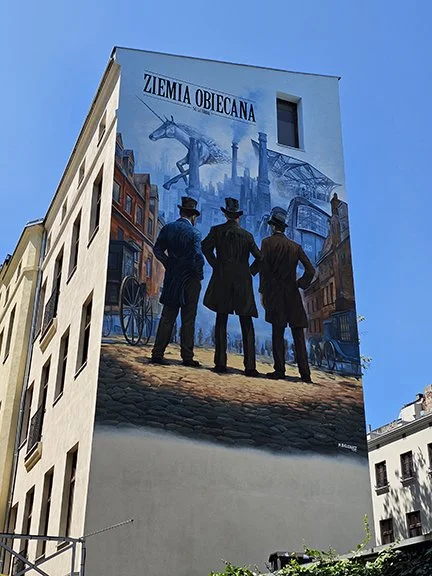
“The Promised Land” mural by Maciej Bielewicz, created in May 2025 to mark the 50th anniversary of Andrzej Wajda’s film. 120 Piotrkowska Street, Łódź. Photo: Jacek Gwizdka.

Joanna Sokołowska-Gwizdka

There are cities that take shape slowly, accumulating the memories of generations over centuries. And there are others that spring up almost overnight, born of human enterprise, ambition, and the desire for success. Nineteenth-century Łódź belonged to the latter. Within just a few decades, a small town surrounded by fields and forests was transformed into a mighty industrial center. Where wooden houses had stood not long before, multistory factories, palaces resembling aristocratic residences, and entire neighborhoods of workers’ housing sprang up. Smoke from factory chimneys drifted above the rooftops, and the city lived to the rhythm of machines that never seemed to rest.

People came here from all corners of Europe: Poles, Germans, Jews, and Russians. Some brought capital, others their skills, and still others nothing but the hope that here, at last, their fortunes might change. For many, Łódź was a place where they could begin anew, make a fortune, rise in society, and escape poverty and obscurity.

It was in this city, whose power was built on dreams but also on the ruthless pursuit of wealth, that Władysław Reymont found the inspiration for one of the most important novels in Polish literature — The Promised Land.

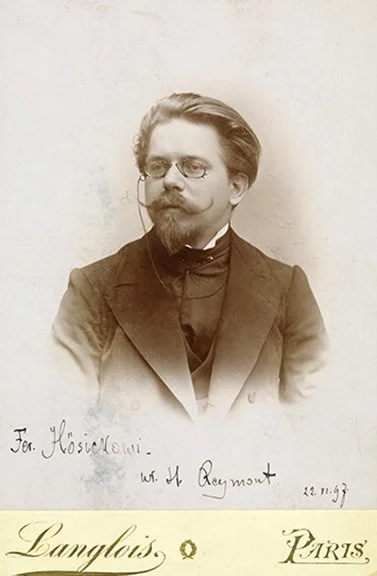
Władysław Stanisław Reymont, 1897. Photographer unknown. Collection of the National Library of Poland in Warsaw / Polona. Public domain.

Reymont and the Epic of Łódź

Władysław Stanisław Reymont, born in 1867 in Kobiele Wielkie, was not a writer shaped by academic circles or literary salons. Before gaining literary recognition, he experienced life in all its unpredictability. He trained as a tailor, worked for the railway, and performed with traveling theater companies. He observed people, their weaknesses, hopes, and passions. He was fascinated not only by everyday life but also by the powerful collective forces capable of overwhelming the individual.

In 1896, Reymont traveled to Łódź to see for himself a city growing at a pace unprecedented in the Polish lands. For several months, he observed its daily life, getting to know its people, factories, and the mechanisms behind the creation of vast fortunes. The city’s energy fascinated him, yet it also filled him with unease. In a letter to Jan Lorentowicz dated November 5, 1896, he described the growth of the city, its fortunes, and its business ventures as taking place „with truly American speed.” He saw Łódź as an unstoppable economic force, calling it „a vast stomach devouring people and land.” Yet within this restless, multicultural world, he discovered an extraordinary source of literary inspiration. „Łódź is an epic to me,” he confided to Lorentowicz.

This remarkable vision of the city found expression in his novel. Łódź is far more than the setting for its events. It becomes a character in its own right, an elemental force that imposes its laws upon the people who inhabit it. It draws them into its relentless motion, promises riches, but demands a heavy price in return. From his observations of the industrial metropolis, Reymont created an epic of modern capitalism, in which human dreams, ambitions, and passions intertwine with the ruthless laws of money.

The Promised Land was serialized between 1897 and 1898 and published in book form in 1899. A quarter of a century later, Reymont was awarded the Nobel Prize in Literature for The Peasants, his great epic of Polish rural life. Although these two works explore seemingly opposite worlds, they share an extraordinary ability to portray entire communities, their conflicts, customs, and struggles for survival.

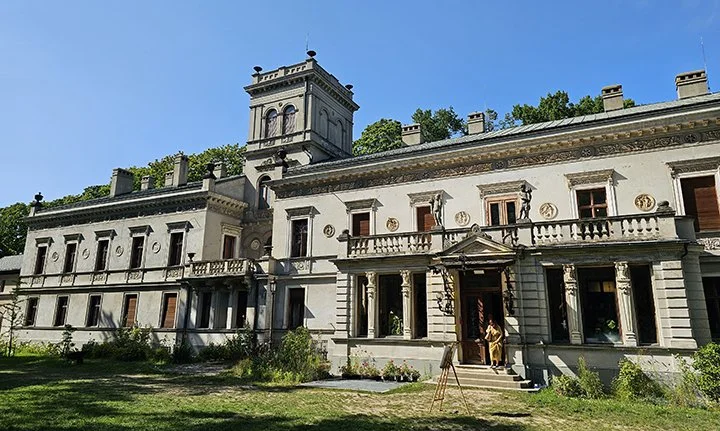
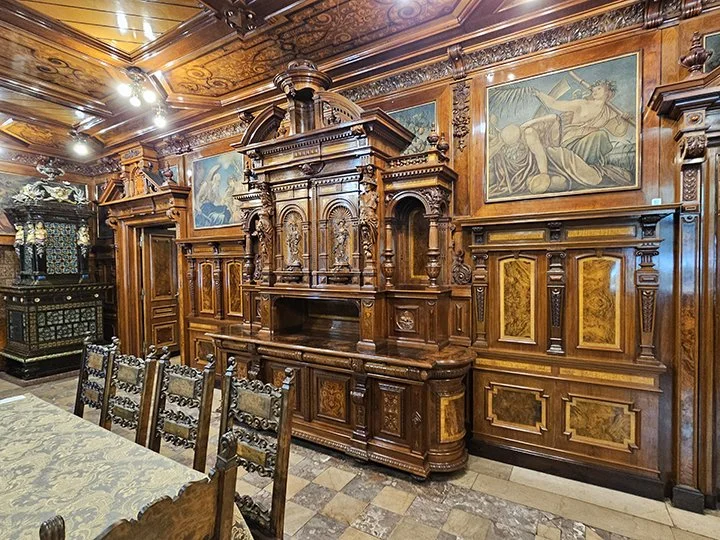
The Palace of Karol and Anna Scheibler in Łódź, now home to the Museum of Cinematography. Photo: Jacek Gwizdka.

The Palace of Karol and Anna Scheibler in Łódź, now home to the Museum of Cinematography. The palace’s historic interiors were used as filming locations for Andrzej Wajda’s The Promised Land. Photo: Jacek Gwizdka.

Łódź Under Tsarist Rule

The history of industrial Łódź is all the more remarkable because the city flourished at a time when Poland no longer existed on the political map of Europe. The country had been partitioned among neighboring powers, and Łódź lay within the Kingdom of Poland, under Russian rule.

The city’s development was closely tied to the economy of the Russian Empire. Its vast eastern markets offered Łódź’s factory owners opportunities for selling their goods on a scale that proprietors of small weaving workshops could scarcely have imagined. At the same time, industrialists had to contend with the policies of the Russian authorities, their administrative decisions, customs duties, and transportation restrictions.

At the beginning of the nineteenth century, Łódź had only a few hundred inhabitants. By the end of the century, its population had grown to more than three hundred thousand. The transformation unfolded at a pace that inspired both admiration and unease.

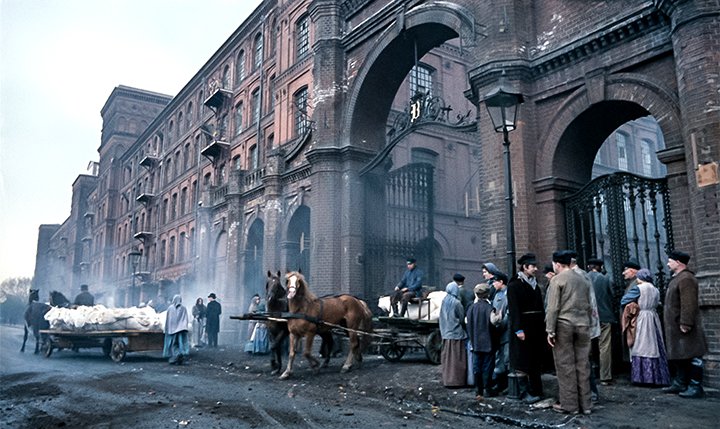
The city became home to the vast industrial enterprises of Karol Scheibler, Izrael Poznański, Ludwik Geyer, and other manufacturers. Alongside the factories rose the owners’ grand residences, hospitals, schools, churches, synagogues, and entire neighborhoods of workers’ housing. Wealth existed side by side with poverty, while the city’s rich cultural diversity was accompanied by fierce competition for economic power.

„Ziemia obiecana” (1974), reż. Andrzej Wajda, materiały fotograficzne: WFDiF / 35mm.online. Jeszcze przez ponad 100 lat pracowano na tych samych maszynach w Zakładach Przemysłu Bawełnianego im. Juliana Marchlewskiego, co za czasów Izaaka Poznańskiego.

Łódź – An Industrial Textile Empire

Reymont’s comparison of Łódź’s development to that of America was no coincidence. The nineteenth century witnessed the emergence of new industrial cities on both sides of the Atlantic, growing at a pace that seemed to defy the established course of history.

In the United States, a similar transformation could be observed in Lowell, Massachusetts, one of the leading centers of the American textile industry. Along the Merrimack River, vast spinning mills and weaving factories sprang up, powered first by water and later by steam. Young women from rural families came to the city seeking employment and financial independence, followed by successive waves of immigrants. Lowell became a symbol of the American Industrial Revolution, embodying both its extraordinary opportunities and its social tensions.

In Pittsburgh, Pennsylvania, fortunes were built on iron and steel. In Chicago, where railroads, the grain trade, and meatpacking fueled economic expansion, the pace of growth evoked the image of a city rising almost overnight. American industrialists such as Andrew Carnegie and John D. Rockefeller became symbols of an era in which capital could transform not only the physical landscape but also the social hierarchy.

Łódź was not an American city. It lacked political freedom and operated under different economic conditions. It remained part of the Russian Empire and developed within a distinct social and political environment. Yet the similarities between these two worlds were striking.

On both sides of the Atlantic, a powerful myth took hold: that through individual initiative, determination, and enterprise, anyone could build a fortune. It was a dream of upward mobility, independence, and seemingly limitless opportunity. In America, it eventually became known as the American Dream. In Łódź, it was the Promised Land.

There was also a less romantic parallel. In both worlds, immense fortunes existed alongside profound social inequalities, harsh working conditions, and conflicts between factory owners and workers.


Cotton from America – A Thread Connecting Continents

Yet there was a far more tangible connection between Łódź and America than their shared economic ambitions. That connection was cotton.

The essential raw material of Łódź’s textile industry had to be imported from distant lands. One of its principal sources was the United States, particularly the Southern states, where vast cotton plantations stretched across the landscape.

Texas was among the regions participating in this international trade. Cotton was transported to ports, shipped across the Atlantic, and passed through the hands of European merchants and intermediaries before eventually reaching the continent’s textile mills.

The textile industry of Łódź was therefore dependent on supplies of American cotton. This vulnerability became painfully apparent when the American Civil War broke out in 1861.

The blockade of Confederate ports and the disruption of cotton shipments led to what became known in Europe as the „cotton famine.” The crisis also reached Łódź. In January 1862, Ludwik Geyer’s factories suspended production, partly because of a shortage of raw cotton.

Few examples illustrate nineteenth-century globalization more vividly. From the plantations of the American South to the factories of Łódź stretched an invisible web of economic interdependence, connecting continents, people, and their destinies.

St. Alexander Nevsky Orthodox Cathedral in Łódź, built between 1879 and 1884 to a design by Hilary Majewski. Photo: Stevenlodz / Wikimedia Commons, CC BY-SA 4.0.

The Railway, the Orthodox Cathedral, and the Politics of Wealthy Industrialists

The rapid growth of industry required an efficient transportation system. Yet for many years, Łódź had no direct railway connection. Cotton, coal, and machinery had to be transported by horse-drawn wagons from railway stations outside the city. One such station was Rokiciny, located along the Warsaw–Vienna Railway.

For industrialists, this posed a serious problem. Expanding factories required ever-increasing quantities of raw materials, while finished textiles had to reach distant markets. Łódź’s factory owners therefore lobbied for the construction of a railway line.

It was not until 1865 that Tsar Alexander II authorized the construction of a railway connecting Łódź with Koluszki. Freight services began shortly afterward, followed by passenger services the next year. The opening of the Łódź Factory Railway marked a new chapter in the city’s economic history.

Not far from Łódź Fabryczna Railway Station stands St. Alexander Nevsky Orthodox Cathedral, whose richly ornamented architecture remains a reminder of the era of Russian rule.

The cathedral’s origins were closely tied to the political realities of the time. In 1879, following a failed assassination attempt on Tsar Alexander II, a decision was made to build the church. Among its benefactors were some of Łódź’s wealthiest industrialists, including Karol Scheibler and Izrael Poznański. Designed by Hilary Majewski, the cathedral was completed and consecrated in 1884.

In a city where different nationalities and religions converged, money often proved to be a common language. Economic pragmatism could transcend religious and national boundaries, even as political dependencies and social inequalities remained firmly in place.

The Promised Land (1974), directed by Andrzej Wajda. Photographic materials: WFDiF / 35mm.online.

The Promised Land – Between Biblical Hope and the Illusion of Wealth

The title of Reymont’s novel has its origins in the Bible. The Promised Land, Canaan, was the land toward which Moses led the Israelites — a symbol of hope, freedom, and the fulfillment of God’s promise.

In nineteenth-century Łódź, however, these words took on an ironic meaning.

For thousands of newcomers, the city held the promise of dreams fulfilled. One did not have to inherit a great fortune to imagine becoming a factory owner someday. Courage, ingenuity, perseverance, and a little luck were supposedly all that was needed.

Yet Reymont reveals how easily the promise of happiness can turn into a relentless pursuit of money, and how success can become a force that destroys human relationships.

The novel’s three protagonists — Karol Borowiecki, a Pole; Maks Baum, a German; and Moryc Welt, a Jew — come from three different cultural worlds, yet they share a single dream: to establish their own factory and build a fortune.

Their friendship and joint venture become a metaphor for the multinational character of Łódź. At the same time, Reymont portrays a city in which traditional values gradually give way to the logic of profit. Honor, loyalty, love, and even human life can become elements of economic calculation.

Yet the writer does not offer a simple morality tale of wicked rich men and virtuous poor people. His characters are caught in the mechanisms of a world they themselves help create. Money grants them freedom, yet at the same time binds them ever more tightly.

It is precisely this paradox that gives The Promised Land its timeless significance.

The Promised Land (1974), directed by Andrzej Wajda. Outside the former Izrael Poznański factory. Photographic materials: WFDiF / 35mm.online.

Andrzej Wajda and His Adaptation of The Promised Land

More than seventy years after the publication of Reymont’s novel, Andrzej Wajda returned to the world the writer had created. His monumental film adaptation, produced in 1974 and released in theaters in February 1975, became one of the greatest achievements of Polish cinema. The film received an Academy Award nomination for Best Foreign Language Film.

Daniel Olbrychski as Karol Borowiecki, Wojciech Pszoniak as Moryc Welt, and Andrzej Seweryn as Maks Baum delivered unforgettable performances. The cinematography of Witold Sobociński, Edward Kłosiński, and Wacław Dybowski, together with Wojciech Kilar’s musical score, gave the film extraordinary expressive power. Łódź once again became a character in its own right — a city of movement, noise, fire, opulence, and human suffering.

Wajda did not simply transfer the novel faithfully to the screen. He offered his own interpretation of the story, particularly evident in his portrayal of Karol Borowiecki and in the film’s ending.

In Reymont’s novel, despite his moral compromises and accumulated wealth, the protagonist ultimately comes to a painful realization about his wasted life. He begins to recognize the possibility of finding meaning in serving others. In Wajda’s film, however, Borowiecki is denied this prospect of moral redemption. He remains a man governed by the logic of capital, while the final scene, depicting the brutal suppression of a workers’ protest, gives the story a far sharper social and political dimension.

Wajda also viewed nineteenth-century Łódź through the lens of twentieth-century experience, including the memory of workers’ protests and violence perpetrated by the communist authorities. The result was a film that not only reinterpreted Reymont’s novel but also spoke to the realities of the director’s own time.

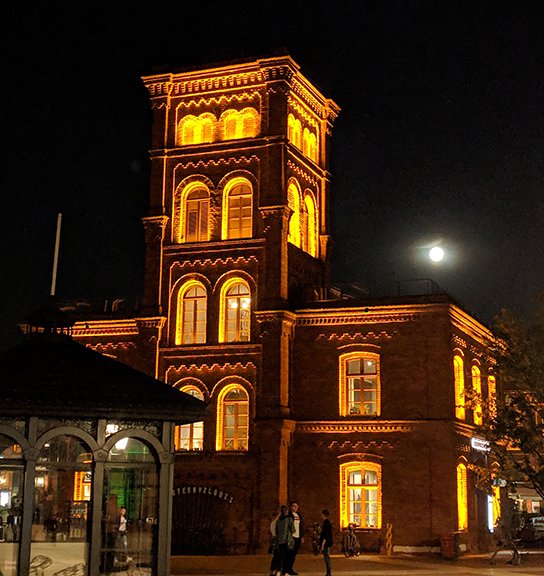
Manufaktura, now an arts and shopping complex housed in the former Izrael Poznański textile factory. Photo: Jacek Gwizdka.

Artists in Former Industrial Spaces

The industrial Łódź of the past has vanished, but its traces remain visible throughout the city. The monumental factories of Scheibler and Poznański, the industrialists’ palaces, the workers’ housing estates of Księży Młyn, churches, Orthodox cathedrals, and former synagogues recall a time when Łódź was one of the most important textile centers in this part of Europe.

Today, these former industrial spaces are being given new life. Within the walls of old factories, museums, galleries, universities, residences, and gathering places are emerging. Łódź, once a city that produced textiles on an enormous scale, is increasingly shaping its identity around culture, art, cinema, and the memory of its own history.

One might say that the city is once again seeking to create its own promised land.

Reymont’s novel raises questions that have lost none of their relevance: Does achieving everything one has dreamed of truly bring happiness? Does wealth mean freedom, or can it become another form of captivity? Must great advances in civilization come at the expense of those who do not share in their rewards?

These dilemmas connected nineteenth-century Łódź with America’s industrial cities. And they continue to resurface wherever people believe that economic success will fulfill their deepest aspirations.

Perhaps this is precisely why The Promised Land remains such a compelling work. It is more than a story about the industrialists of the past, capitalism, and Łódź. It is a story about human nature, the power of dreams, and the price we are willing to pay to make them come true.

Joanna Sokołowska-Gwizdka On November 13, 1924, Władysław Reymont was awarded the Nobel Prize in Literature for his monumental novel „The Peasants.” This four-volume epic, which Reymont wrote between 1901 and 1908, was published in installments in „Tygodnik Illustrowany” from 1904 to 1909. The novel’s action spans ten months—from September to July at the turn … READ MORE


See also:

Sources:

State Archives in Łódź
Łódź Industrialists (Łódzcy fabrykanci)

Central Museum of Textiles in Łódź
The Myth of Łódź as the Promised Land

Łódź–Poznań Orthodox Diocese
History of the Orthodox Parish in Łódź

Texas State Historical Association
Authors: Karen Gerhardt Britton, Fred C. Elliott, and E. A. Miller.
Cotton Culture – Handbook of Texas

Texas State Historical Association
Authors: Jack Becker and Matthew K. Hamilton.
Wartime Cotton Trade – Handbook of Texas

Texas State Historical Association
Antebellum Texas – Handbook of Texas

National Park Service
Author: Thomas Dublin.
Lowell: The Story of an Industrial City

National Park Service
The Mill Girls of Lowell

Władysław Stanisław Reymont
Ziemia obiecana (The Promised Land), 1899.

Władysław Stanisław Reymont
Korespondencja 1890–1925 (Correspondence, 1890–1925), edited and introduced by Barbara Koc, Ludowa Spółdzielnia Wydawnicza, Warsaw, 2002, pp. 208–209.

Dorota Samborska-Kukuć
“Reymonta osobiste i literackie spotkania z Łodzią” (Reymont’s Personal and Literary Encounters with Łódź), Acta Universitatis Lodziensis. Folia Litteraria Polonica, No. 1 (68), 2024.

National Film Archive – Audiovisual Institute (FINA)
The Promised Land – FINA

Andrzej Wajda – Official Website
The Promised Land – Andrzej Wajda

Polish Film Academy
The Promised Land – Polish Film Academy

Culture.pl
Chronology of Andrzej Wajda’s Life

Between Word and Image – The Literary Inspirations of Wojciech Jerzy Has

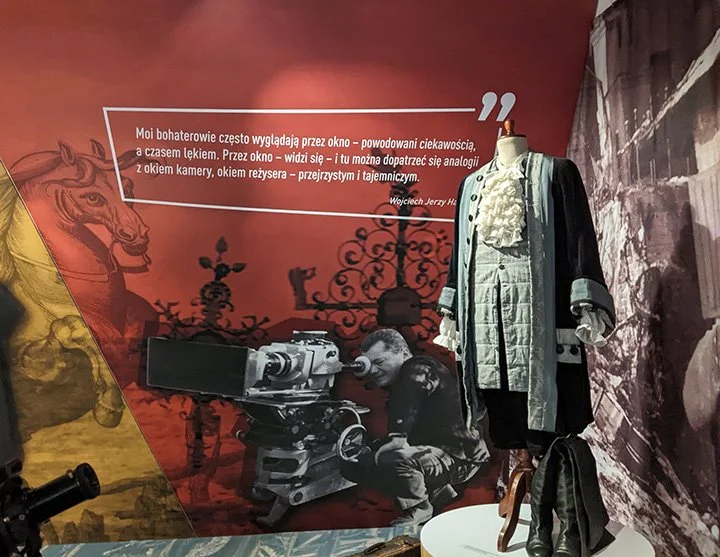
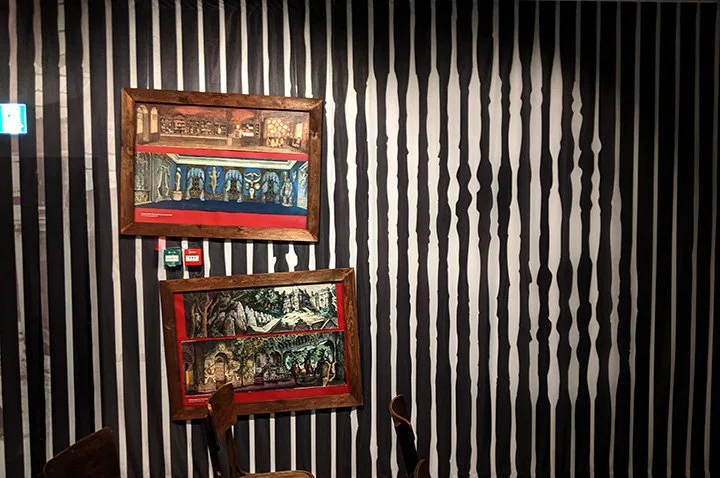
“Has’s Journeys,” exhibition at the National Center for Film Culture in Łódź, August 2025, photo by J. Sokołowska-Gwizdka

The work of Wojciech Jerzy Has represents one of the most beautiful encounters between literature and cinema in the history of Polish culture. A director endowed with an extraordinary visual imagination and a deep sensitivity to the written word, Has was able to translate prose into the language of images in a profoundly original way. His films are not faithful illustrations of literary works—they are poetic interpretations, painterly records of emotion, memory, and imagination. Has did not so much adapt literature as he painted it with light and shadow, transforming words into metaphors and stories into dreams.

Cinema Rooted in Literature

It is no coincidence that most of Has’s films are adaptations of Polish and world literary classics. Yet, the director did not treat the literary text as a ready-made screenplay, but rather as material for personal interpretation. In his films, prose becomes a starting point for philosophical reflection on the world, memory, and the human condition.

In The Manuscript Found in Saragossa (based on the novel by Jan Potocki), Has created a labyrinth of stories, where one tale gives birth to another, and dream blends with reality. In The Hourglass Sanatorium (after Bruno Schulz)—a visual masterpiece—the world of literary metaphor was translated into images of extraordinary plasticity. Each scene resembles a painting: dense, saturated with color, light, and texture.

Similarly, in The Codes (based on Andrzej Kijowski’s prose) and How to Be Loved (after Kazimierz Brandys), Has explored the relationships between past and present, memory and oblivion, giving them a universal dimension. In his hands, literature becomes a spiritual vehicle—a tool for delving into the depths of the human condition.

Image as Memory

Wojciech Has was an aesthete and a collector. In his films, every object—a faded photograph, a clock, a book, a folding fan—carries symbolic weight. It is the things that speak for people, for in them memory is preserved. Has’s camera not only tells a story but also observes and touches. The lens glides over the texture of fabrics, furniture, dust, and smoke, creating a world that feels almost tangible, rich in sensual detail.

In this sense, Has was a continuator of the painterly tradition of the Polish Film School—closely linked to 19th-century and Art Nouveau painting, with its attention to ornament and detail. Each of his films is a visual poem, where aesthetics serve not decoration but metaphor. His frames evoke the canvases of Hieronymus Bosch or Vermeer—mysterious, precise, and multilayered.

“Has’s Journeys,” exhibition at the National Center for Film Culture in Łódź, August 2025, photo by J. Sokołowska-Gwizdka

The World in the Mirror of Illusion

Has’s world is one of illusion, reflection, and dream. The director leads the viewer into an uncertain space, where time loses its linear quality. The protagonists of his films wander like in a labyrinth of memories, searching for meaning in the chaos of events. Has created a cinema of melancholy—filled with reflection on transience, the impossibility of recreating the past, and the loneliness of man within a world of symbols.

In this sense, film becomes for him a philosophical meditation, and image—a tool of understanding. As the director himself wrote, “Film is like a dream from which we do not wish to wake.”

The Legacy of a Visual Poet

The work of Wojciech Jerzy Has remains one of the most important chapters in the history of Polish art cinema. His films—with their union of literary depth and refined visual form—continue to inspire filmmakers around the world. In an age when cinema is often ruled by spectacle and plot, Has reminds us that the image can carry spiritual meaning.

He was a poet of cinema, painting with light and shadow. His frames—like the words of Schulz or Potocki—never age, for they touch what is timeless in the human soul: the longing for beauty, memory, and meaning.

„Has’s Journeys,” exhibition at the National Center for Film Culture in Łódź, August 2025, photo by J. Sokołowska-Gwizdka

Compiled by Joanna Sokołowska-Gwizdka


Films Directed by Wojciech Jerzy Has

The Noose (1957)
Based on the short story by Marek Hłasko.
A moving portrait of a man struggling with addiction and loneliness, unfolding over the course of a single day. Has preserved the psychological depth of Hłasko’s prose, giving it the rhythm of cinematic breathing.

Farewells (1958)
Based on the novel by Stanisław Dygat.
A coming-of-age story of a young intellectual during wartime, imbued with melancholy and irony. The film depicts the loss of illusions and the passing of youth—a theme close to both Dygat and Has.

Shared Room (1959)
Based on the novel by Zbigniew Uniłowski.
A portrait of the Warsaw bohemia of the 1930s, with its poverty, dreams, and restlessness. Has captures the atmosphere of the literary original with remarkable tenderness, creating a film about the disillusionments of a young generation.

Goodbye to the Past (1960)
Based on the short story by Stanisław Dygat.
A subtle tale of the end of love, rendered in a tone of reflection and sorrow. The film is also a poetic study of the transience of feelings and memories.

Gold (1962)
Based on the short story by Józef Hen.
The story of treasure hunters in post-war Lower Silesia. Has transforms Hen’s prose into a moral parable about human greed and the longing for redemption.

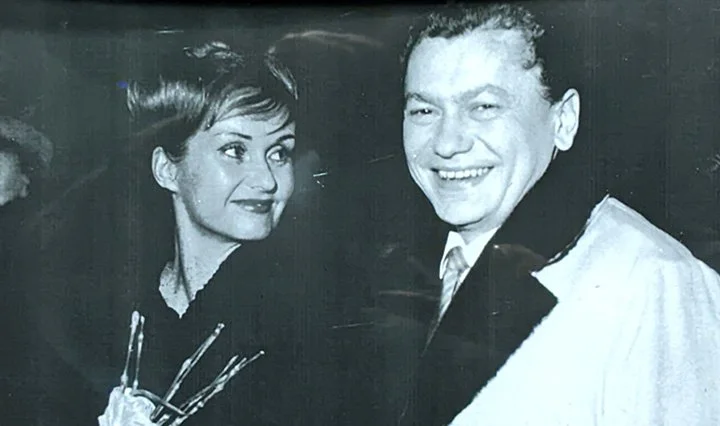
Barbara Krafftówna and Wojciech Has after the gala premiere of the film How to Be Loved on January 11, 1963, at the Moskwa Cinema in Warsaw. Photo by Jerzy Troszczyński, source: exhibition Has’s Journeys.

How to Be Loved (1963)
Based on the short story by Kazimierz Brandys.
One of the greatest achievements of Polish psychological cinema. A woman who has survived the war returns to her memories. Has creates a film about memory, guilt, and solitude, in which literature becomes a confession of the soul.

The Manuscript Found in Saragossa (1964)
Based on the novel by Jan Potocki.
A masterpiece of world cinema—a baroque labyrinth of stories where reality mingles with fantasy. Has brought the novel’s multilayered structure to the screen with extraordinary visual mastery.

The Codes (1966)
Based on the short story by Andrzej Kijowski.
An intimate drama of a father and son trying to rebuild their bond after the war. Has presents the past as a space of uncertainty and silence, where every word carries the weight of mystery.

The Doll (1968)
Based on the novel by Bolesław Prus.
One of the most complete adaptations of a literary classic. In Has’s interpretation, Wokulski becomes a symbol of a man torn between love and reason, ideal and reality. The film enchants with its visual richness and psychological subtlety.

Exhibition “Has’s Journeys”

The Hourglass Sanatorium (1973)
Based on the stories by Bruno Schulz.
A poetic dream about time, memory, and death. Has transformed Schulz’s prose into a visual poem, where the world of objects and memories comes alive within the magical space of a dream.

From Nowhere to Nowhere (1975)
Original screenplay by the director, spiritually inspired by the works of Fyodor Dostoevsky and Bruno Schulz.
A metaphorical film about human confusion and the search for meaning in a purposeless world. Here, Has fuses philosophy and the poetry of the image.

An Uninteresting Story (1983)
Based on the short story by Anton Chekhov.
An intimate study of an aging professor taking stock of his life. With remarkable delicacy, Has portrays the drama of lost purpose and spiritual exhaustion.

Memoirs of a Sinner (1985)
Loosely inspired by the prose of Jerzy Harasymowicz.
An introspective tale of guilt and confession of the soul. Has creates a visual world of symbols and memories, where the boundary between dream and reality nearly disappears.

The Tribulations of Balthazar Kober (1988)
Based on the novel by Frédérick Tristan.
Has’s final film—a philosophical parable about a man seeking truth and meaning in a world filled with illusion. A mystical, masterfully photographed journey through the realms of knowledge and faith.

„Has’s Journeys,” exhibition at the National Center for Film Culture in Łódź, August 2025, photo by J. Sokołowska-Gwizdka


Krystyna Skarbek – Spy, Lady, the Inspiration for James Bond

Krystyna Skarbek, also known as Christine Granville, France, August 1944, photographer unknown, source: Wikimedia Commons

She was a woman from another time — an era when people still believed in honor, truth, and courage. Krystyna Skarbek, the daughter of a Polish count, was born in Warsaw in 1908, when the old empires still stood and Poland was yet to be reborn. Her childhood unfolded in the shadow of the manor house, among whispers of ancestors who had served kings and emperors, of horses, hunts, and salons where people discussed Chopin and Sienkiewicz.

Her father, Count Jerzy Skarbek, came from an old noble family bearing the Abdank coat of arms, whose history dated back to the Middle Ages. Family stories echoed with the past glory of the Skarbeks — landowners, benefactors, and patrons of the arts. It was the Skarbeks of Żelazowa Wola who owned the manor where Fryderyk Chopin was born and who became his godparents. Yet, by Krystyna’s time, that world was fading. Debts, squandered fortunes, and social change meant that noble titles had become mere echoes of former grandeur.

Krystyna’s mother, Stefania Goldfeder, came from a completely different world — that of Jewish bankers from Łódź, wealthy and modern, whose fortunes were built in banks and factories. It was her dowry that saved the Skarbek name from ruin. And yet, deep in Krystyna’s soul lived what she had inherited from her father: pride and an untamed need for freedom.

From Polish Manors to the Underground

When war broke out, Krystyna was already a woman seasoned by life and marriage, but it was the war that became her true destiny. In 1939, in Paris, she volunteered for the British secret service. She was 31, with the beauty of a film star, flawless French, and a courage that would become legendary. She was accepted into the Special Operations Executive (SOE) — the secret organization created by Churchill to “set Europe ablaze.”

Under the alias Christine Granville, she embarked on a game where the stakes were life and death — her own and that of hundreds of others. Her first mission already made her a near-mythical figure. In the winter of 1940, wearing a fur coat and ski boots, she crossed the Tatra Mountains, carrying messages and microfilms from Hungary into occupied Poland. In the cold and wind, often alone, she was guided only by instinct and bravery. Her mountain guide from Zakopane later recalled that he had “never seen a woman so calm in the face of death.”

In Budapest, where she was stationed for several months, she built a network of contacts and communications that delivered the first credible reports on the situation in occupied Poland to London. She used many aliases — including Paulina Armand and Madame Granville — and could win over aristocrats, diplomats, and simple soldiers alike.

After the fall of France and Hungary, she was sent on new missions to North Africa and France. There she performed one of the boldest acts in the history of Allied intelligence — she rescued two SOE agents, Francis Cammaerts and Xan Fielding, who had been captured by the Gestapo. She walked into the prison and spoke to a German officer, relying not only on her charm but also on financial persuasion and the threat of swift retribution once the Allies triumphed. Within hours, the prisoners were free.

Morgane Polanski as Krystyna Skarbek in the film “The Partisan”, directed by James Marquand, 2024, photo: press materials

Krystyna Skarbek never carried a weapon and never used violence. Her weapons were intelligence, courage, and feminine charm. In British intelligence reports, she was described as “irreplaceable,” “brilliant,” and “unpredictable.” She had the gift of winning people over — one moment she could laugh lightheartedly, and the next, look with cold determination, like someone who already knew the price of death.

She was also a master of disguise. When needed, she changed her accent, her walk, or the color of her hair. One day she played a French countess, another a poor refugee. She could infiltrate enemy circles with astonishing ease. Her superior, Colonel Colin Gubbins, once said that he had “never before seen anyone play with fate so gracefully.”

For her service, she was awarded the Order of the British Empire (OBE) and the George Medal — among the highest British civilian honors. To the French, she was a heroine; to the Poles, a legend. To herself, simply a woman who had fulfilled her duty to her country.

After the War – The Loneliness of a Heroine

When victory came, there was no longer a place for people like her. Krystyna was too brave to fade quietly into postwar London and too proud to ask for help. She worked as a stewardess, cleaner, and receptionist — a woman of noble birth who had saved lives, now struggling to survive.

In the Shelbourne Hotel on Lexham Gardens in London, in a stuffy room overlooking a brick courtyard, time seemed to stop. It was there, on June 15, 1952, that she was murdered by a man who was in love with her.

She died as she had lived — beautiful, independent, and untamed. At her funeral in St. Mary’s Cemetery in Kensal Green, only a handful of people were present.

Inspiration for James Bond

Her extraordinary personality — elegance, magnetism, and fearlessness — became an inspiration for writer Ian Fleming, who worked in British intelligence during the war. Fleming knew Krystyna personally and was deeply impressed by her charm and audacity. Many biographers believe that Krystyna Skarbek was one of the prototypes for James Bond, and that her life and adventures also inspired the creation of Fleming’s female characters.

The Legacy of the Skarbek Family

The Skarbek family has vanished from the map of Polish aristocracy — their manors and estates now exist only as names on yellowed maps. But the memory of Krystyna endures. In London, on the wall of the building where she died, a blue plaque reads: Christine Granville – Krystyna Skarbek (1908–1952), Agent of the Special Operations Executive.

Compiled by Joanna Sokołowska-Gwizdka

Blue commemorative plaque unveiled in 2020 by English Heritage at 1 Lexham Gardens, Kensington, London, W8 5JL, Royal Borough of Kensington and Chelsea, source: Wikimedia Commons


20th Austin Polish Film Festival, Texas

As part of the 20th Austin Polish Film Festival, audiences will have the opportunity to see the film “Skarbek”, inspired by the story of Krystyna Skarbek and directed by James Marquand. The Festival’s special guest will be Morgane Polanski, daughter of Roman Polanski, who stars in the leading role.

You are warmly invited!

https://www.austinpolishfilm.com/

“The Saragossa Manuscript” – the Labyrinth of Wojciech Jerzy Has’s Imagination

The Saragossa Manuscript,” dir. Wojciech Jerzy Has, 1965. As Alphonse van Worden: Zbigniew Cybulski.
Photo:
press materials.

A Masterpiece Beyond Time

“The Saragossa Manuscript” (1965), directed by Wojciech Jerzy Has, is one of the most original and enigmatic works in the history of world cinema. The adaptation of the novel by Jan Potocki—an Enlightenment-era aristocrat, traveler, and writer—defies clear classification. It is at once an adventure film, a philosophical treatise, a grotesque, and a metaphor for the human condition and the search for meaning. Has created a complex world in which reality, dream, and fantasy continually intertwine.

The Plot as a Labyrinth

The story unfolds in Napoleonic Spain. Captain Alphonse van Worden (played by Zbigniew Cybulski) travels through the Sierra Morena mountains, where he experiences a series of extraordinary adventures. He encounters Arab princesses, Kabbalists, bandits, scholars, noblemen, and characters hovering between life and death. Each encounter opens a new story—often embedded within another—forming a tale within a tale structure reminiscent of The Thousand and One Nights or Boccaccio’s Decameron.

Has leads the viewer into a labyrinth of narratives, where stories nest inside one another, characters continually shift roles, and the boundary between illusion and reality dissolves entirely. The result is a kind of metaphysical theater of the world, in which humanity seeks to understand its own identity.

Time and Space – The Philosophy of Has

Wojciech Has was a filmmaker who treated cinema as an art of memory. In his films, time does not flow linearly—it becomes a collage of memories, dreams, and mental states. In The Saragossa Manuscript, time loops back on itself, and space transforms. The protagonist returns to the same places and encounters the same characters, as if taking part in a ritual of repetition.

This is a cinema about the impossibility of escaping the labyrinth of one’s own consciousness. There is no true beginning or end—only a constant unveiling of new layers of reality. Has uses this form to challenge faith in a logical order of the world and to portray the human being as an existence caught in a state of eternal cognitive wandering.

“The Saragossa Manuscript,” dir. Wojciech Jerzy Has, 1965. Photo: press materials.

The Character of Alphonse van Worden

Van Worden is a quintessential Hasian hero—lost, uncertain, and suspended between worlds. Zbigniew Cybulski, known for his iconic role as Maciek Chełmicki in Ashes and Diamonds, undergoes a complete transformation here. Instead of rebellion and action, he conveys constant wonder, his face reflecting bewilderment before the mystery of existence.

In van Worden’s character lies a universal symbol: a human being in search of the absolute, continually confronted with new illusions. His journey becomes a spiritual initiation—a passage from naïveté to knowledge, though this knowledge is never complete.

The supporting cast includes Leon Niemczyk, Iga Cembrzyńska, Bogumił Kobiela, Gustaw Holoubek, and Elżbieta Czyżewska—each adding a distinct tone to the film’s mosaic of meanings.

The Aesthetics and Style of Has

The Saragossa Manuscript is also a visual masterpiece. Cinematographer Mieczysław Jahoda crafted images rich in symbolism, color, and light, evoking the atmosphere of the Spanish desert, mysterious caves, and opulent palatial interiors. The set design by Jerzy Skarżyński borders on the surreal—the décor seems to belong more to the realm of dreams than to that of reality.

Has, a master of cinematic space, builds tension through rhythm and repetition. The viewer feels drawn into a ritual, a journey not so much across Spain as through the human mind. It is no coincidence that the film is often interpreted as an allegory of the artist’s life and the human condition in a world devoid of final answers.

“The Saragossa Manuscript,” dir. Wojciech Jerzy Has, 1965. Photo: press materials.

The Film’s Philosophy – On Knowledge, Identity, and Illusion

The Saragossa Manuscript is a film about knowledge as an infinite process. Has asks whether it is possible to reach truth if every story only leads to another, and every truth turns out to be part of a greater illusion.

The film can also be read as an allegory of representation itself—and thus, of cinema. Each scene becomes a screen reflecting another screen, just as cinema reflects upon itself. In this sense, Has was ahead of his time—his film anticipates postmodern reflections on narrative and consciousness.

The Meaning of the Journey

Wojciech Jerzy Has created a film that cannot be fully understood—it can only be experienced. His protagonist, like each of us, seeks truth but discovers above all the infinity of interpretation. The Saragossa Manuscript thus remains not only a cinematic masterpiece but also a parable about the human mind, forever wandering through the labyrinth of imagination.

Reception and Legacy

When it premiered in 1965, the film met with mixed reactions—praised for its originality yet criticized for excessive complexity. Only years later did The Saragossa Manuscript become a cult classic. Admirers such as Martin Scorsese, Luis Buñuel, David Lynch, and Francis Ford Coppola championed it; thanks to their involvement, the film was restored in 1999, bringing it back to international audiences.

Today, The Saragossa Manuscript is regarded as one of the greatest achievements of Polish cinema. It belongs to the tradition of metaphysical films that—like Fellini’s 8½ or Tarkovsky’s Stalker—transcend genre boundaries to become philosophical meditations on the nature of existence.

The Saragossa Manuscript,” dir. Wojciech Jerzy Has, 1965. Photo: press materials.

Screenings with Live Music

Although The Saragossa Manuscript by Wojciech Jerzy Has was made in 1965, the film continues to inspire new generations of artists. One of the most remarkable forms of its reinterpretation has been screenings with live music, held in recent years both in Poland and abroad. These events give Has’s work an entirely new dimension—it becomes not only a film but also an audiovisual spectacle, where image and sound together create a hypnotic experience.

The original score for the film was composed by Krzysztof Penderecki, already a renowned figure of avant-garde music at the time. His composition combined classical instrumentation with unsettling sonorities and experimental effects, perfectly capturing the film’s dreamlike and labyrinthine atmosphere.

Contemporary musical projects inspired by Has’s film have taken this idea even further. During the 50th Polish Film Festival in Gdynia, a screening with live music took place at the Witold Gombrowicz Municipal Theatre. On stage performed the group Małe Instrumenty, known for their sound experiments, together with the Elbląg Chamber Orchestra conducted by Katarzyna Tomala-Jedynak. Their task was exceptional—the original Penderecki score had not survived in full, so the musicians reconstructed it note by note from archival recordings. Among the guests was Wanda Ziembicka-Has, the director’s widow.

“The Saragossa Manuscript,” dir. Wojciech Jerzy Has, 1965. Photo: press materials.

Meeting of Eras

Such events create a remarkable bridge between past and present. Audiences, seated in a cinema or concert hall, become participants in a new cinematic ritual—an experience in which the classics of film meet the living energy of contemporary music.

These screenings confirm that Has’s film continues to inspire—not only directors and critics, but also composers and performers. The Saragossa Manuscript thus lives on, not in a museum, but in the space between the arts.

Compiled by Joanna Sokołowska-Gwizdka


20th Austin Polish Film Festival, Texas


As part of the 20th Austin Polish Film Festival, audiences will have the opportunity to see Wojciech Jerzy Has’s masterpiece The Manuscript Found in Saragossa.
We warmly invite you to join us.

https://www.austinpolishfilm.com/

Sounds of Freedom: Michał Urbaniak Remembers Zbigniew Seifert.

September 11, 2017, Łódź, Klub Wytwórnia, 11th edition of the Urbanator Days 2017 music workshops. In the photo: Michał Urbaniak, photo by Łukasz Szeląg

As far as I remember, I met Zbigniew Seifert in the mid or late ’60s during a jam session at one of the clubs in Warsaw. At that time, Zbyszek was collaborating with Tomasz Stańko. He was a quiet guy, playing the saxophone. Later, he also started playing the violin, just like me – sometimes combining both instruments.

Polish jazz musicians formed a real family back then – a group of somewhat crazy and courageous people. We played jazz essentially against the system because it was banned as an imperialist influence in the communist country. Music was our whole life at the time. This clearly reflects Zbyszek’s creativity and his work. He even released an album titled Passion.

We first played together in the radio jazz orchestra in Warsaw and then had numerous jam sessions. Recordings were rare because they were controlled by the state record label. We played side by side on saxophones – he on alto and I on tenor, as well as on violins.

Seifert chose a very difficult and ambitious path, inspired by John Coltrane. He created many great pieces in this direction during his time playing jazz violin. You can hear Coltrane’s playing concept, vibe, and energy in Zbyszek’s improvisations – it’s something that comes from different periods of Coltrane’s music. Playing that kind of music isn’t easy; it’s very demanding. To start, you have to be an excellent violinist. At first, it was like a journey into the unknown.

Most of us started with the violin as children. I assume Zbyszek’s path to the saxophone was similar. He fell in love with the saxophone, just like I did, and began playing it. But later, his music became more complex and open, so the violin eventually became his second instrument, and then his primary one.

Zbigniew Seifert, photo by press materials

Both instruments are truly important to me. If I were to compare our approaches, I play more like a saxophonist, while Zbyszek played like a brilliant violinist, deeply rooted in the jazz and cultural spirit.

In the 1960s, we were already traveling abroad, mainly to Germany, although some of us also went to England and the Netherlands. I remember our performances at the Berlin Jazz Festival and other festivals – his playing was extraordinary, even grand. We also recorded together in Germany, and our project was supported by Joachim Ernst Berendt, a well-known jazz critic and producer. He also helped promote Zbyszek and his music.

After some time, I permanently moved to New York and didn’t hear much about Tomek Stańko or Zbyszek Seifert. Then suddenly, Zbyszek appeared there, recording several sessions with outstanding New York musicians like John Scofield and Jack DeJohnette. When Zbyszek arrived in New York for his first recordings, many very famous musicians were excited about him and supported him. It naturally developed from there – the music found its way to the musicians, there was simply no other possibility.

His playing, especially on the violin, was something entirely new – no one had ever gone in that direction before. It was extremely difficult and demanding, but Zbyszek was also a superb classical musician, which helped him push boundaries and achieve what he aimed for. He was a workaholic, a humble person, and his life revolved around music, constant practice, and performing.

Over time, Seifert not only developed his style but also became a leading figure in that genre of violin music. He has numerous solo albums, group recordings, and live performances to his name. The album Man of the Light was a breakthrough for him and for us as well. That album is excellent; we all listen to it more often than others. He worked every day; I remember how he would practice, play solos, and constantly improve – he was truly a dedicated artist.

Album cover of „Man of the Light”

In recent years, I have served as a jury member at several competitions named after him, and I have noticed that many young European musicians emulate his style, both in rhythmic jazz and in the improvised European music that Seifert also performed and recorded. Moreover, playing his music is technically demanding on the violin. I have heard many incredible young virtuosos who can play in Seifert’s style. The competition rules require performing one of Seifert’s pieces, and most participants bring his spirit into their playing – people from the Netherlands, Japan, this year’s Italian violinist, and many others. Truly fantastic young violinists. Many of them can play in his style, but some also choose a more traditional approach, returning to swing and mainstream jazz.

As Coltrane once said: “Don’t imitate me, I’m searching.” Seifert was also searching for his own sounds, and so many years after his passing, he remains a source of inspiration because he was authentic.

Interview: Jacek Gwizdka

Edited by: Joanna Sokołowska-Gwizdka

The documentary film „Zbigniew Seifert: Interrupted Journey” will be shown on November 8, 2024, during the Austin Polish Film Festival:

The 100th Anniversary of Władysław Reymont’s Nobel Prize for "The Peasants”

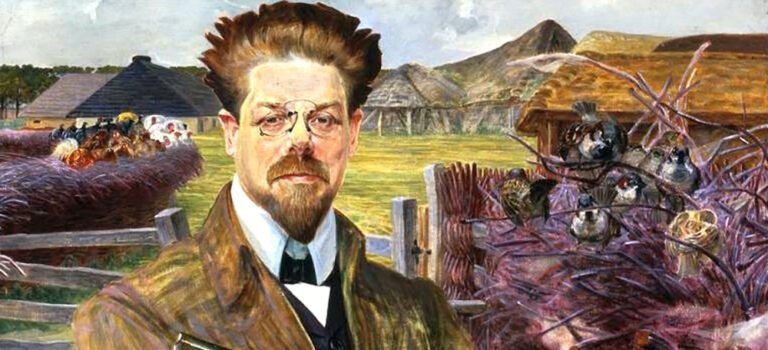
The 1905 portrait of Władysław Reymont by Jacek Malczewski is available on the digital collection of the National Museum in Warsaw at cyfrowe.mnw.art.pl

Joanna Sokołowska-Gwizdka

On November 13, 1924, Władysław Reymont was awarded the Nobel Prize in Literature for his monumental novel “The Peasants.” This four-volume epic, which Reymont wrote between 1901 and 1908, was published in installments in “Tygodnik Illustrowany” from 1904 to 1909. The novel’s action spans ten months—from September to July at the turn of the 19th and 20th centuries—and is set in the small village of Lipce. It is divided into four parts, each reflecting the cycle of nature: “Autumn,” “Winter,” “Spring,” and “Summer.” The renowned literary critic Kazimierz Wyka emphasized that Reymont created a unique work in Polish literature, one that not only tells the story of the peasants’ lives but also faithfully captures their mentality, customs, and worldview. In his analysis, Wyka noted how the author constructs the depicted world through the rhythms of nature, cyclical agricultural work, the changing seasons, and festivals that dictate the rhythm of the characters’ lives. “The Peasants” is also a study of universal human emotions and conflicts—love, jealousy, greed, and the struggle for power—giving the novel a timeless and universal character.


Władysław Reymont, circa 1897, photo available at the Polona Digital Library

Władysław Reymont, born on May 7, 1867, as Władysław Stanisław Rejment in Kobiele Wielkie, within the Russian Partition, spent his youth during a time when Poland was divided among three empires. Artistically connected with the Young Poland movement, he drew inspiration from the lives of ordinary people and the Polish countryside. In his works, such as The Promised Land and The Comedienne, he portrayed not only the beauty but also the hardships and injustices that were the daily realities of his characters. Before becoming a writer, Reymont worked as a railway laborer and an actor in a traveling theater, experiences that later inspired his literary work.

The Nobel Prize in Literature, awarded for “the most outstanding work of an idealistic tendency,” recognized Reymont’s epic narrative and his realistic and poetic depiction of rural Polish life. However, the Nobel Committee’s decision in 1924 was unexpected. Although Reymont was respected in Poland, his fame did not match that of other candidates, such as the German writer Thomas Mann, the Russian playwright Maxim Gorky, or the 1915 French Nobel laureate Romain Rolland. In addition to honoring the literary value of The Peasants, the prize for the Polish author also had a political dimension—it highlighted international recognition of Poland, which regained its independence in 1918 after 123 years of partition.

Reymont, who had long struggled with health issues, including a heart attack, did not receive the news of the award with excessive enthusiasm, aware that it might be his last great achievement. He passed away a year later, on December 5, 1925, at the age of only 58. In letters to friends, he wrote about the “irony of life”—on one hand, worldwide fame and recognition, and on the other, the battle with illness that prevented him from fully enjoying his success. Due to health reasons, he was unable to personally accept the award in Stockholm; instead, it was received on his behalf on December 10, 1924, by Alfred Wysocki, the then-Polish diplomatic representative in Sweden. The monetary prize, amounting to 116,000 Swedish crowns, helped the writer with medical treatments and provided financial security for his family.

On August 15, 1925, Władysław Reymont visited the small village of Wierzchosławice near Tarnów at the invitation of Wincenty Witos. In honor of the writer, a grand harvest festival, known as the “Reymont Harvest Festival,” was organized. In the photo, Władysław Reymont (center) is pictured with his wife on the honorary platform

Reymont’s success was a source of immense national pride for Poles, especially in the context of rebuilding the state after regaining independence. Newspapers such as Kurier Warszawski and Rzeczpospolita published enthusiastic articles, praising the writer’s talent and the significance of his work for Polish national identity. Reactions abroad varied—some critics expressed surprise that the prize was awarded to a lesser-known author. German newspapers, such as the Frankfurter Allgemeine Zeitung, emphasized that Thomas Mann, the author of Buddenbrooks, was more deserving of the distinction. The Swedes, however, believed that Reymont brought freshness and authenticity to European literature, fully justifying their choice.

On November 22, 1924, Warsaw’s Tygodnik Illustrowany published an article titled “The European Press on Reymont.” The article revealed how deeply Europeans were engaged with literature at the time and how moved they were by the news of the award. There were extensive articles about the author (some newspapers dedicated entire issues to Reymont) as well as critical essays on The Peasants and brief informational notes. Tygodnik Illustrowany also published a letter from Romain Rolland:

Thank you very much for sending me the French translations of your two books. As for The Peasants (Autumn), I hold it in the highest regard. What a fertile and rich land. (…)

Happy is the one who, like you, is not merely a laborer of books (as Goethe said, the more one writes or reads such books, the more one becomes a book himself!)—but is instead the land itself—his own land, in the full cycle of the four seasons!

I congratulate you, I congratulate not just you but your entire nation through you. I rejoice that Poland has you, and I thank you for allowing me the privilege of knowing you.

Believe me, dear Mr. Władysław Reymont, that I am fully devoted to you with all my admiration.

Romain Rolland

The widespread popularity of Reymont’s epic led to numerous translations and publications of The Peasants worldwide. Reymont himself was invited to attend meetings at literary societies across Europe. On June 6, 1925, Tygodnik Illustrowany published an article titled “The Worldwide Fame of Reymont,” in which the author discussed the many invitations the writer accepted during the spring of 1925. Although Reymont had been unable to accept the Nobel Prize in person, these later travels benefited him. The color returned to his cheeks, and a smile reappeared on his face, along with his former energy. During this period, he frequently heard that the literature he created had become a part of the world’s cultural heritage. American newspapers expressed gratitude that the Nobel Committee had recognized this previously lesser-known yet truly brilliant author.

A banquet was held on May 15, 1925, by the France-Poland Society and the Société des Gens de Lettres in Paris in honor of Władysław Reymont (second from the left). To the writer’s right sits the French government representative, Minister de Monzie, and to his left, the president of the French Society of Writers, Legolfic. Photo published in Tygodnik Illustrowany, June 6, 1925

A hundred years after being awarded the Nobel Prize, The Peasants remains one of the most significant works of Polish literature. The novel has inspired numerous film, theater, and television adaptations, including the latest animated painting version, which has received acclaim both in Poland and abroad. The Peasants continues to be studied by literary critics and scholars who analyze its social layers as well as the symbolism of nature and the life cycle.

In the context of global climate change, Reymont’s message about the harmony between humans and nature takes on new relevance. The themes of returning to tradition, defending local cultures, and preserving agriculture in the face of globalization are presented in The Peasants in a way that remains both timely and thought-provoking.

“Tygodnik Illustrowany”, June 6, 1925

Polish Nobel Prize Laureates in Literature:

  • Henryk Sienkiewicz – 1905

  • Władysław Reymont – 1924

  • Czesław Miłosz – 1980

  • Wisława Szymborska – 1996

  • Olga Tokarczuk – 2018

Sources: Wikipedia, TVP, Culture.pl, NobelPrize.org, Tygodnik Illustrowany, collections of the University Library in Łódź.

G A L L E R Y

Photo by J. Sokołowska-Gwizdka

Between 1888 and 1893, Władysław Reymont worked as a railway guard for the Warsaw-Vienna Railway and lived, among other places, in Lipce in this house located by the railway crossing. Photo by J. Sokołowska-Gwizdka

The house of Władysław Reymont in Lipce Reymontowskie. It was here that the writer set the action of The Peasants. Lipce (now Lipce Reymontowskie) served as inspiration but are not depicted exactly as they appear in the novel. Photo by J. Sokołowska-Gwizdka

Lipce Reymontowskie, a historic peasant cottage located within the Władysław Reymont Museum, photo by Joanna Sokołowska-Gwizdka

The Władysław Reymont Museum in Lipce Reymontowskie, photo by J. Sokołowska-Gwizdka

The Władysław Reymont Museum in Lipce Reymontowskie, photo by J. Sokołowska-Gwizdka