In Search of Memory
/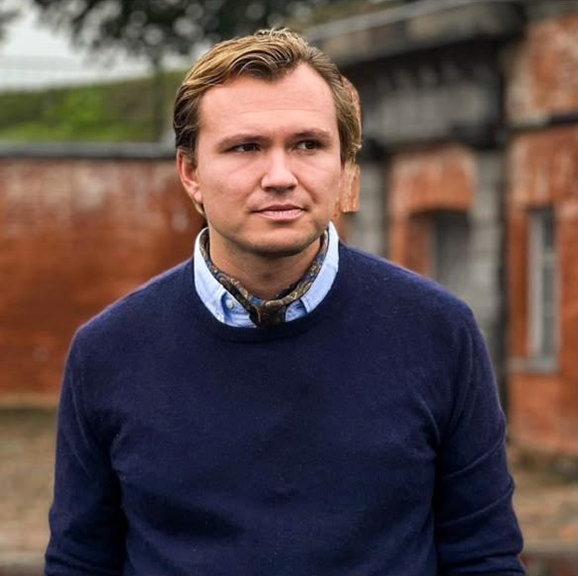
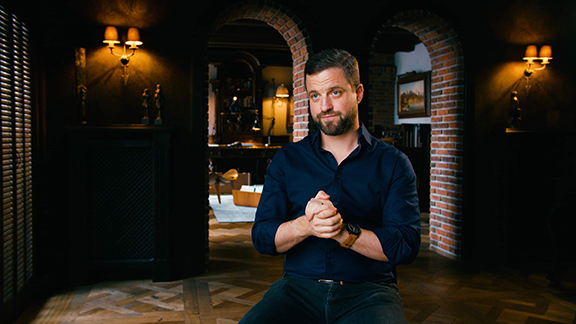
Joanna Sokołowska-Gwizdka talks with Stefan Tompson — documentary filmmaker, promoter of Polish history, and co-creator, with Patrick Ney, of Covenant of Blood: The Last Soldiers of World War II.
*
Family Roots
Joanna Sokołowska-Gwizdka: You were born in London, have Polish and British roots, and your family history also extends to South Africa. What was your upbringing like?
Stefan Tompson: My father is British, from South Africa. His family has lived there since the early nineteenth century. He left South Africa in the 1980s. On my mother’s side, I’m Polish. She, too, was born in the West. We grew up across several cultures: we spoke Polish with our mother and English with our father, and we attended French schools.
You speak Polish without a noticeable foreign accent. Who do you have to thank for that?
My mother. She put an enormous amount of effort into it. Polish was the language of our home, and we also attended Polish Saturday schools. Before 2004, those schools were primarily places where the children of wartime émigrés and those who had left Poland during the Solidarity era came together. These communities had strong ties to Poland and were firmly anti-communist. Later waves of immigration changed that community considerably.
Why did the Polish side of your family go into exile?
Stefan Tompson: They didn’t leave for economic reasons. There were Polish diplomats in the family, and the war, followed by communism, meant they couldn’t return. When the war broke out, my grandmother was staying at the family estate near Lwów. By 1940, she was in London. My grandfather was a diplomat in Brazil and later ended up in Britain as well.
Is there a story passed down in your family that captures that experience of exile particularly well?
There’s a story about my grandmother. After the war, my grandfather bought her some flower seeds. My grandmother, who had grown up on an estate with vast stretches of land, said she had never imagined that one day she wouldn’t have enough soil to fill a pot and plant some flowers.
To me, that story captures the fate of people who grew up in prosperity and then found themselves in exile with almost nothing. In London, they recreated their world: they established Polish institutions, clubs, schools, and parishes. There were organizations such as Ognisko Polskie and POSK, the Polish Social and Cultural Association. A whole network of families knew one another and kept their connection to Poland alive.
How much of that world has survived in your generation?
A great deal has changed. What pains me most is the loss of the language and the connection to Poland in successive generations. Among the people I know, there are few families like ours, in which those born in the West still speak Polish fluently. That makes me appreciate my mother’s efforts all the more.
I also look at the later waves of emigration. Poles are very hardworking and enterprising. I saw educated people arrive in Britain and take jobs far below their qualifications. There is dignity in all work, but it was difficult to see their potential going to waste. Many eventually became financially secure and joined the British middle class. From Poland’s perspective, though, the question remains: how many will return, and what connection to the country will their children retain?
Returning to the Land of My Ancestors
When and why did you decide to settle in Poland?
In 2015. I was 22 at the time. As I mentioned, my family hadn’t ended up in Britain by choice. After the war, they wanted to return and help rebuild Poland, but that wasn’t possible. I felt that, now that Poland was a free country, I could live and work there, pay taxes, and build businesses. I also wanted to start a family and raise my children in Poland.
I still spend a lot of time in South Africa and other African countries, where we also have clients. But I wanted to make Poland my home and contribute to its development.
You say “I returned,” even though you were born in London.
Strictly speaking, it wasn’t a return to my birthplace. But across the generations, that is how I see it: as bringing my family’s forced exile to an end. I came with my brother, and my sister later moved here too. Of the four of us siblings, three now live in Poland. Our parents also spend part of the year here.
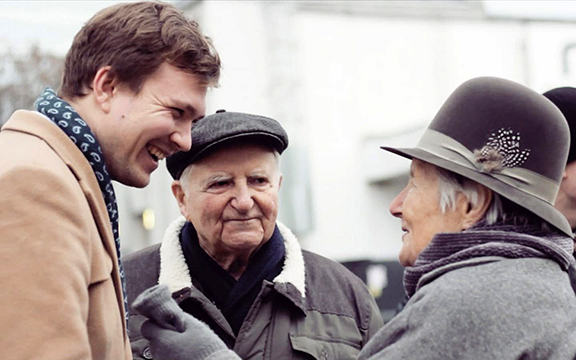
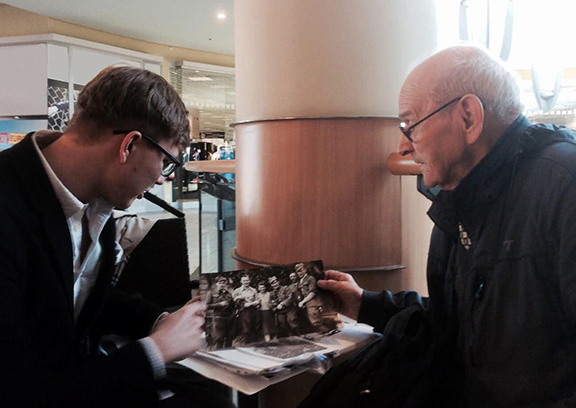
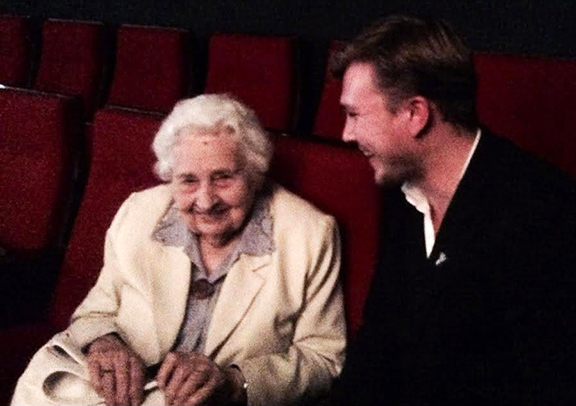
I’m very happy with that decision. I can see how Poland is developing. It also meant a great deal to me that I arrived in time to get to know many veterans, Warsaw Uprising participants, and members of the anti-communist underground. In 2015–2016, I spent a lot of time with them.
Family History and Film
Did your interest in communism and the people who resisted it stem from your family’s experiences?
Absolutely. Communism was the reason our family wasn’t in Poland. Two of my grandfather’s brothers were murdered at Katyń. So my relationship with that system is deeply personal.
I see its consequences on several levels: in the murder of people and the destruction of the country’s elites, in the loss of economic potential, but also in the destruction of a sense of beauty. I look at prewar architecture, at the cities and what Poles managed to create despite the partitions. Then I see the grayness and uniformity imposed by communism. To me, those wounds are still visible, not only in Poland but also in other countries across Central and Eastern Europe.
Did that desire to tell the story of life under communism lead to Covenant of Blood: The Last Soldiers of World War 2, the film about Poland’s postwar underground resistance that you co-directed with Patrick Ney, a Briton fascinated by Polish history?
Yes, but paying tribute to the people who actually fought against that ideology was just as important. Earlier, I made a film called Oni budowali nasze szczęście (“They Built Our Happiness”), about entrepreneurs working under communist rule in Poland, including private market gardeners. It was a tribute to the unsung heroes of small business who tried to make a living despite the system.
With the film about the soldiers of the anti-communist resistance, I felt this was our last chance to reach the surviving witnesses. It was also important to me to tell their story in English. I wanted people who don’t have access to Polish-language material to learn about their sacrifice and courage.
You speak of a debt to these people. What does that debt mean to you?
Above all, it is a moral debt. There were people who not only refused to take part in the system but chose to fight it, risking everything. I think of Hieronim Dekutowski, Łukasz Ciepliński, August Emil Fieldorf, Witold Pilecki, and Zygmunt Szendzielarz and his soldiers. Their lives took different paths, and their forms of resistance varied, but they shared a willingness to make sacrifices.
I also see a continuity of resistance that later found expression in workers’ protests, opposition activism, and the Solidarity movement. Through this film, I wanted to repay my own debt to the soldiers of the anti-communist resistance.
Who is the film intended for?
Two groups. The first is people of Polish descent who no longer speak Polish but are interested in their roots. The second is international audiences interested in Poland and the experience of communism.
In the West, the story of Solidarity and the strikes at the Gdańsk Shipyard is well known. Far fewer people know about those who took up armed resistance after the war. We wanted to tell that chapter of the story too.
Collaboration and Personal Encounters
How did you meet Patrick Ney, and what brought you together?
We met online about ten years ago. We were both making short films and conducting interviews, telling stories about Poland in English. Over time, a close friendship developed. We’re very fond of each other and have great respect for one another.
Patrick has no Polish roots. He met a Polish woman and moved first to Wrocław, then to Warsaw. He started a family here and joined the Territorial Defence Forces. To me, he is an example of someone who not only fell in love with Poland but became Polish. He found tradition, faith, and common sense here — things that can also draw people from other countries.
Which of your encounters with veterans have stayed with you most vividly?
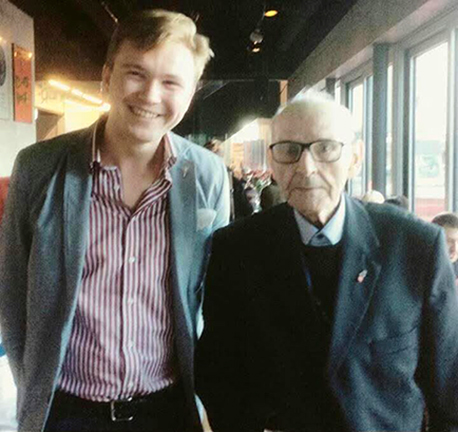
I was friends with Józef Bandzo, codename “Jastrząb,” a soldier who served under Zygmunt Szendzielarz, known as “Łupaszka.” He spent sixteen years in communist prisons. I interviewed him for one of my earliest, still very amateur films, W poszukiwaniu ojczyzny (“In Search of a Homeland”). I was 22 at the time.
I asked the veterans what Poles were like. Bandzo replied, “Poles are good. Poles are a good people.” I often return to those words. I think of goodness, truth, and beauty as interconnected values. That simple answer has stayed with me ever since.
Whose story moves you most deeply today?
Since becoming a father to a daughter, I see Inka’s story differently (Danuta Siedzikówna, a Home Army medic sentenced to death in 1946 as part of the communist regime’s campaign of repression — editor’s note). I knew her story before, but fatherhood has changed the way I experience it. I think of that seventeen-year-old girl and her words to her grandmother: “I behaved as I should.” Those words move me deeply.
I would like to raise my daughter to have that same moral backbone. To me, Inka’s story embodies a healthy Polish patriotism: an understanding that there are values you cannot abandon under pressure. I also think of her family, who lost so much, and of the grandmother to whom she addressed those words.
What do you think the people in these stories have in common?
Extraordinary courage. I am moved by people who knew how overwhelmingly powerful their enemy was and yet chose to fight. I think, for instance, of Zdzisław Badocha, codename “Żelazny,” and the photographs of that young, smiling man. I also think of the tragic fate of Józef Kuraś, known as “Ogień,” and the recollections of his soldiers.
What moves me most is their willingness to give everything, including their lives. I felt that when I recorded my conversations with the veterans, and it has stayed with me ever since.